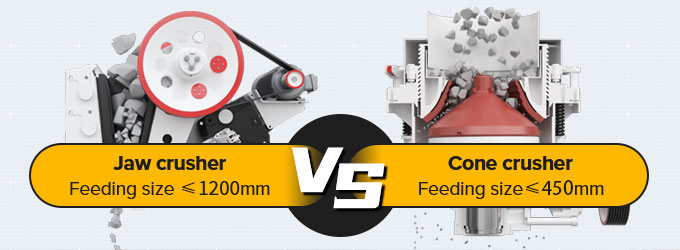
Jaw crushers are among the most widely used crushers in mining, quarrying and aggregate production.
Their ability to handle large feed sizes, hard materials and high production demands makes them the preferred choice for thousands of crushing plants worldwide.
How does a jaw crusher work in a crushing plant?
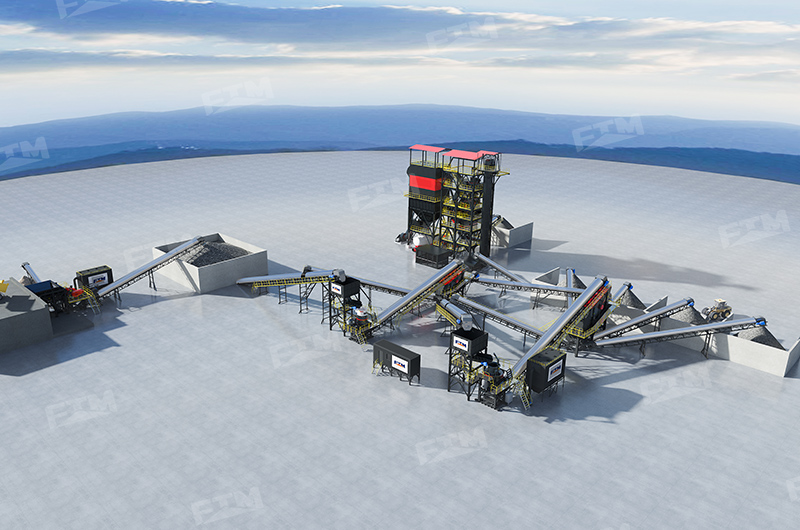
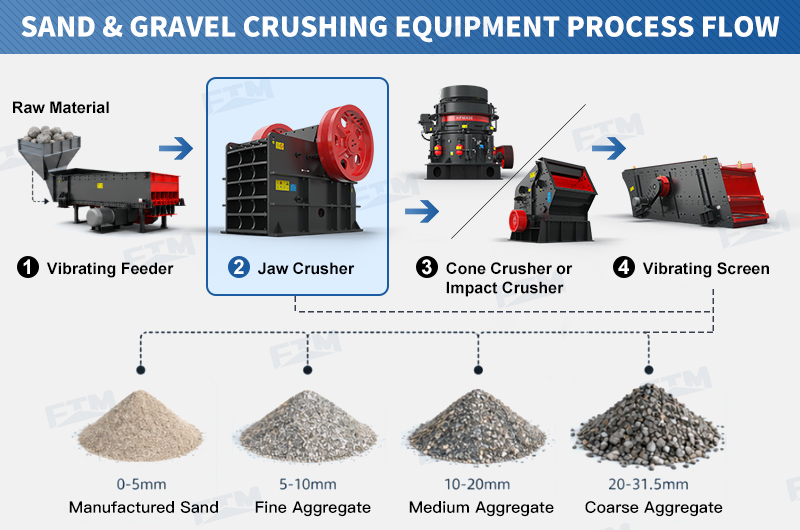
As the primary crusher in a crushing plant, jaw crushers are responsible for reducing large rocks into smaller sizes before secondary or tertiary crushing.
A typical crushing process looks like this:
Raw Material → Vibrating Feeder → Jaw Crusher → Cone Crusher / Impact Crusher → Vibrating Screen → Finished Products
What materials can a jaw crusher crush?
- Hard rocks: granite, basalt, river pebbles, quartzite
- Medium & soft rocks: limestone, calcite, gypsum, talc
- Metallic & non-metallic ores: iron ore, copper ore, gold ore, manganese ore
- Recycled aggregates: construction waste, demolition concrete, asphalt
For hard stones such as granite, basalt and iron ore, the jaw crusher is often considered the foundation of the entire crushing circuit.
Four types of jaw crushers
Not every crushing plant needs the most advanced jaw crusher.
Some operations prioritize lower investment costs. Others focus on higher output, reduced maintenance or lower cost per ton.
That's why FTM Machinery offers four jaw crusher series, each designed for a different stage of production growth.
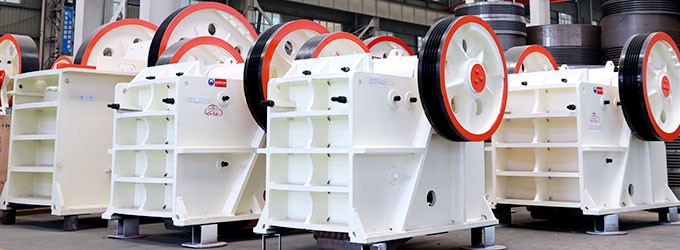
1. PE Jaw Crusher
If you're building a small quarry, starting a new crushing business, or replacing an aging crusher on a limited budget, the PE Series remains one of the most economical options available.
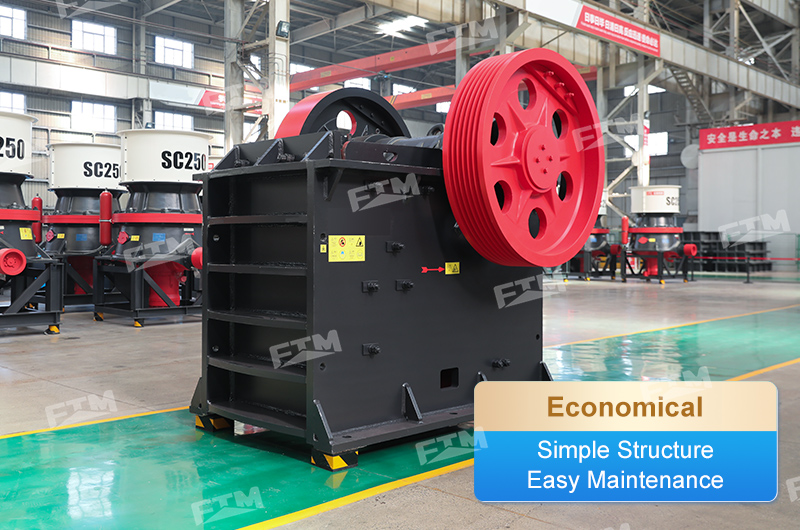
Its simple mechanical design has been proven in thousands of crushing plants worldwide. Maintenance is straightforward, spare parts are widely available and operators can quickly learn how to use the machine.
For limestone, river stone and other medium-hard materials, many operators still find that a PE jaw crusher delivers all the performance they need without the higher investment required for more advanced models.
Typical models include: Get the latest quote
| Model | Max. Feed Size (mm) | Output Size (mm) | Capacity (t/h) |
| PE 250×400 | 210 | 26–90 | 5–21 |
| PE 500×750 | 425 | 50–100 | 40–110 |
| PE 750×1060 | 630 | 80–180 | 110–320 |
| PE 900×1200 | 750 | 100–200 | 220–380 |
2. HD Jaw Crusher
When production targets increase but plant space remains limited, a traditional jaw crusher may no longer be enough.
The HD Series was developed to deliver higher throughput from a more compact machine.
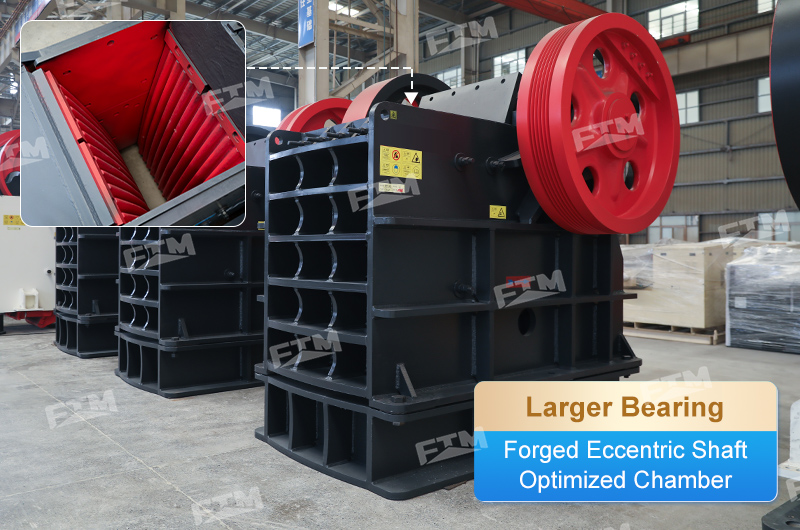
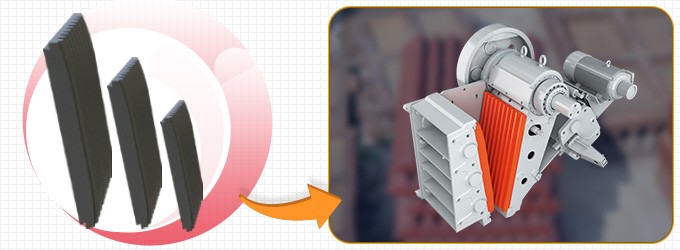
Compared with conventional PE models, HD jaw crushers feature oversized bearings, a forged eccentric shaft, and an optimized crushing chamber. These improvements can increase production capacity by 30%–50% under similar operating conditions.
Typical models include: Get the latest quote
| Model | Max. Feed Size (mm) | Output Size (mm) | Capacity (t/h) |
| HD72(57) | 425 | 45–100 | 50–120 |
| HD86(69) | 500 | 50–150 | 60–280 |
| HD98(751) | 630 | 75–175 | 110–410 |
| HD110(912) | 750 | 100–200 | 230–550 |
3. CJ Jaw Crusher
The CJ Series can be used in both stationary crushing plants and mobile crushing stations.
Its non-welded modular frame can be disassembled for easier transportation, making it suitable for mountain quarries, underground mining projects and mobile crushing operations.
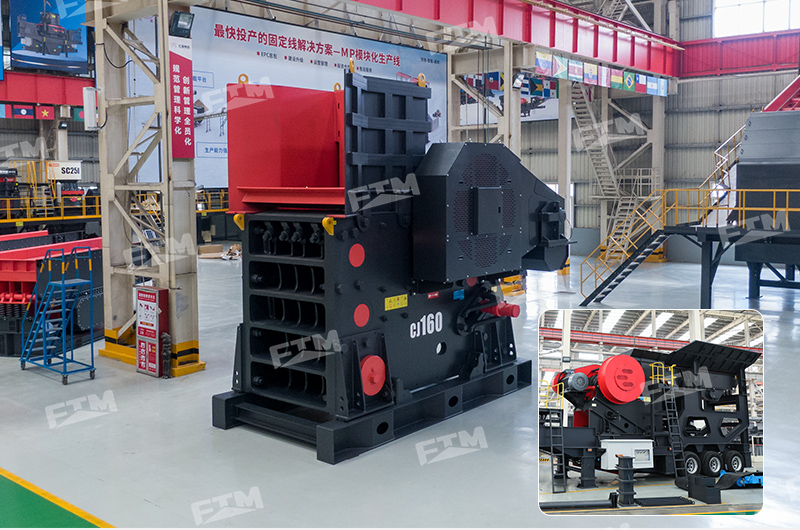
A deep, symmetrical V-shaped crushing chamber reduces the risk of blockages. The maximum feed size can reach 1,200 mm, allowing larger rocks to enter the crusher directly.
Typical models include: Get the latest quote
| Model | Max. Feed Size (mm) | Output Size (mm) | Capacity (t/h) |
| CJ96 | 480 | 60–175 | 105–390 |
| CJ125 | 760 | 100–250 | 270–831 |
| CJ160 | 960 | 150–300 | 430–1,145 |
| CJ200 | 1,200 | 175–300 | 630–1,590 |
4. HJ Jaw Crusher
Many large aggregate producers choose the HJ Series when long-term operating cost becomes more important than initial investment.
Its box-type welded frame provides excellent resistance to impact loads, ensuring longer operating time. And its optimized chamber geometry and reliable adjustment system help reduce unplanned downtime.
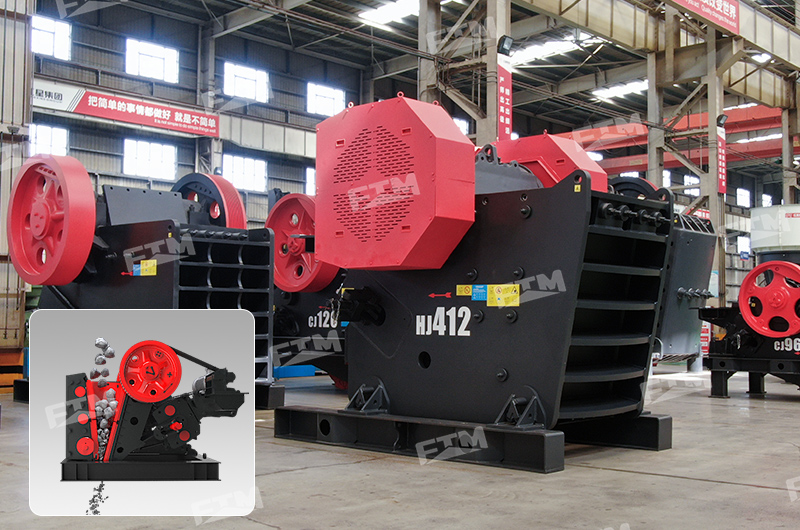
With proper operation and maintenance, this jaw crusher can typically provide 8–15 years of service life, helping operators reduce total ownership costs over the long term.
Typical models include: Get the latest quote
| Model | Max. Feed Size (mm) | Output Size (mm) | Capacity (t/h) |
| HJ308 | 410 | 40–175 | 55–335 |
| HJ310 | 560 | 75–200 | 140–500 |
| HJ613 | 900 | 125–300 | 330–960 |
| HJ815 | 1,040 | 150–300 | 480–1,160 |
Which jaw crusher is commonly used in different applications?
Different crushing projects face different challenges. Material hardness, feed size, production targets and site conditions all influence the choice of jaw crusher.
For aggregate production
Many aggregate plants start with a PE jaw crusher because of its lower investment cost.
As production expands, however, the primary crushing stage often becomes the first bottleneck in the plant.
For stone plants targeting more than 300 tph, HD and CJ jaw crushers are commonly used. The larger crushing chamber and stronger components help improve productivity when processing hard rock continuously.
For iron ore and metal ore crushing
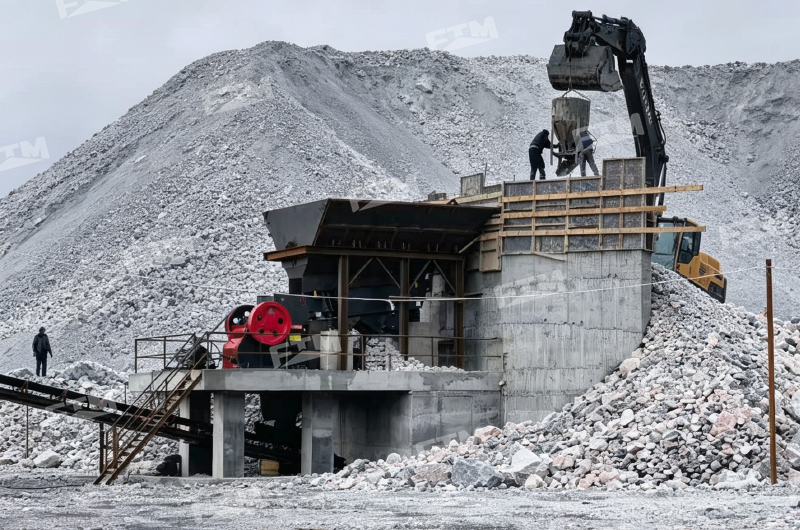
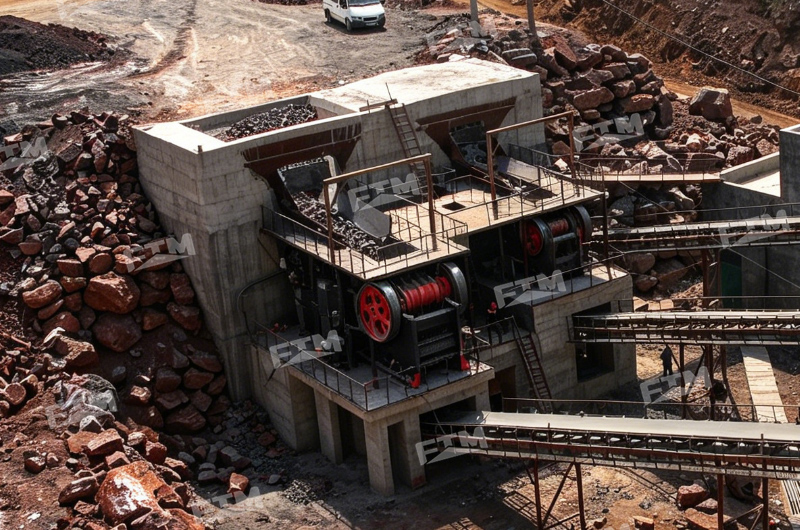
Mining operations typically handle larger feed sizes and more abrasive materials than standard aggregate plants. Instead of dealing with 300-500 mm stone, some mines regularly process ore exceeding 800 mm.
In these conditions, CJ crushers and HJ jaw crushers are often preferred.
Their larger feed openings allow oversized ore to enter the crushing chamber directly, reducing the need for additional pre-crushing equipment.
For construction waste recycling
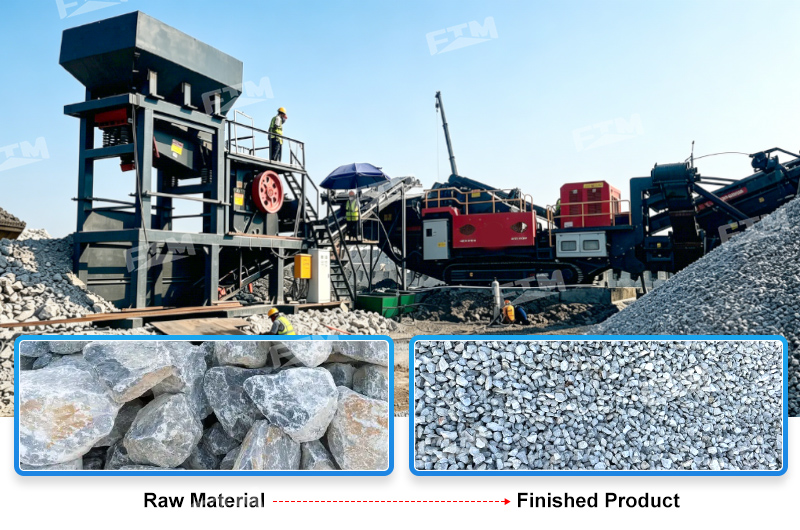
Unlike quarry operations, recycling projects often require equipment to move from one site to another.
For this reason, many contractors choose mobile jaw crushers.
Concrete waste, demolition debris and reclaimed asphalt can be crushed directly at the job site and converted into reusable aggregates. This reduces transportation costs while improving project profitability.
How much does a jaw crusher cost?
Unfortunately, there is no single answer.
A jaw crusher designed for 100 mm limestone has very different requirements from one processing 800 mm granite. The size of the crusher, motor power, wear-resistant components and overall plant configuration may all change accordingly.
A crusher with a lower purchase price may require more maintenance, consume more wear parts or limit plant capacity. Over several years of operation, these hidden costs can far exceed the initial savings.
For this reason, many producers evaluate a jaw crusher based on both purchase price and long-term cost per ton.
Looking for the right jaw crusher?
Whether you're building a new quarry, expanding production or upgrading existing equipment, selecting the right jaw crusher can have a significant impact on plant performance and operating costs.
Our engineers can help evaluate your material, feed size, capacity target, output size and site conditions to recommend the most suitable PE, HD, CJ or HJ jaw crusher.
Contact us today for a customized recommendation and quotation. Contact us