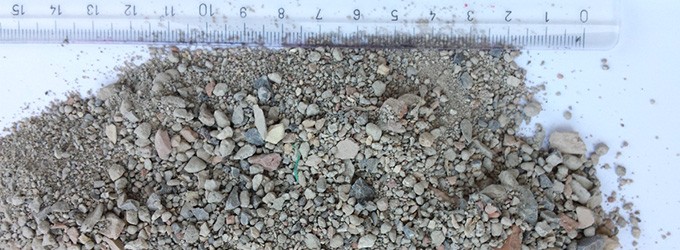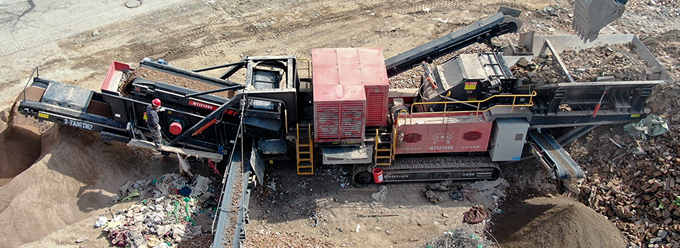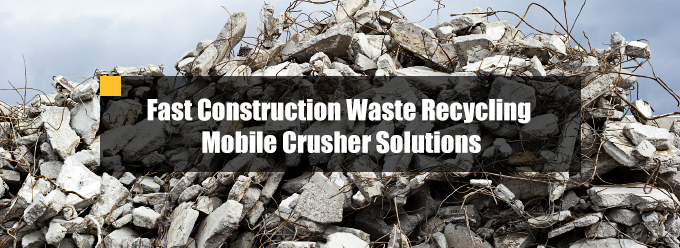
Concrete demolition and urban redevelopment projects generate massive amounts of waste concrete — slabs, blocks, and reinforced concrete.
Instead of hauling debris to landfills, contractors worldwide are now recycling concrete on-site to produce high-value materials such as base course, backfill, sub-base, and even new concrete aggregates.
This complete guide explains:
- A standard concrete recycling process flow
- The 5 most widely used concrete crushers
- A real 300 TPH plant case study
What does a concrete recycling line look like?
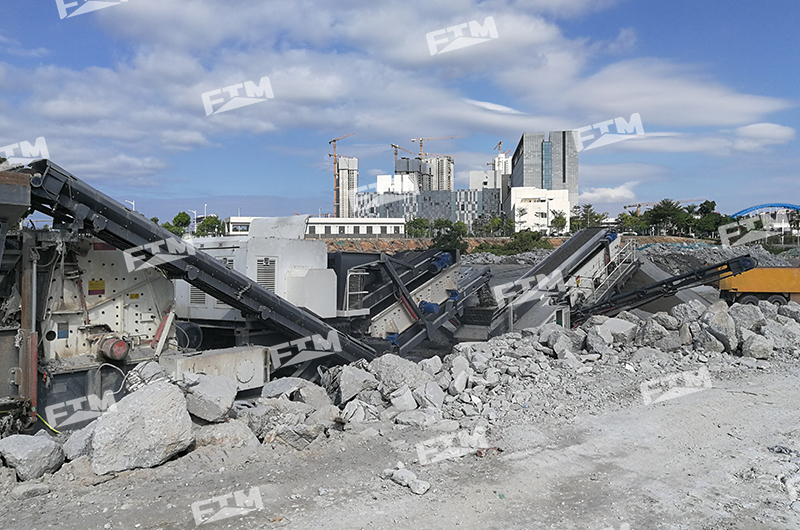
A typical recycled concrete crushing plant includes:
- 1 Feeding: Large concrete pieces (with or without rebar) are dumped into a vibrating feeder.
- 2 Primary crushing: A jaw crusher breaks concrete into 75–200 mm (3–8 in) pieces.
- 3 Magnetic separation: Magnetic separation: A magnetic separator/iron remover removes exposed steel bars.
- 4 Secondary crushing: An impact crusher or cone crusher reduces the size further to 0–40 mm.
- 5 Screening: A vibrating screen sorts aggregates into required sizes.
- 6 Final products: Recycled aggregates (0–5 mm, 5–20 mm, 20–40 mm) ready for road base, backfill, and concrete mixes.
This flow is widely adopted in North America, the Middle East, Southeast Asia, and Africa due to its low operating cost and high efficiency.
The 5 best crushers for concrete recycling
1. Portable concrete crusher (tire type)
Tire-mounted mobile crushers are ideal for demolition sites, small to medium recycling facilities, and projects that require flexible and rapid relocation.
They allow contractors to crush concrete directly at the job site, which is especially valuable in urban areas where transportation and landfill costs are high.
Typical capacities include 50 tph, 100 tph, 150 tph, and 200 tph, with fully customizable configurations depending on project needs. Get the latest quote
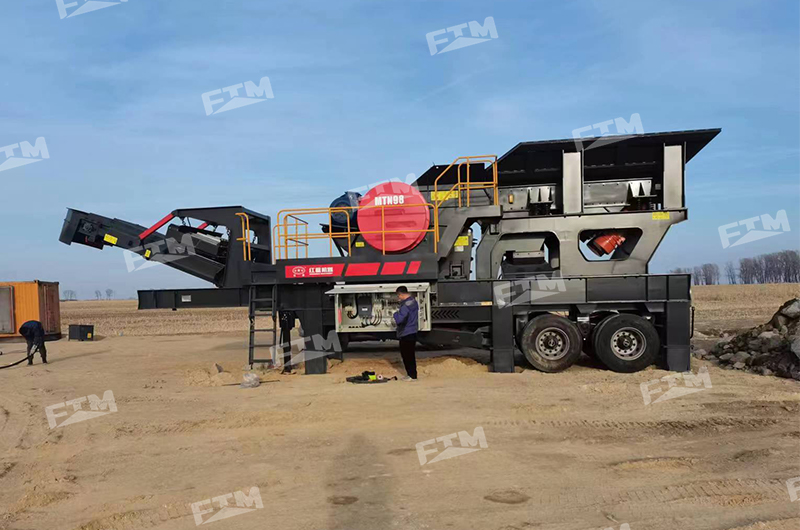
Advantages:
- Fast installation and easy relocation
- Strong primary crushing capability, able to handle large concrete blocks
- Integrated feeding, crushing, screening, and magnetic separation
- Excellent for contractors who frequently move between job sites
Configuration options:
| Jaw crusher + feeder + conveyors + chassis | Cone crusher + vibrating screen + conveyors + chassis | Impact crusher + vibrating screen + conveyors + chassis | VSI sand maker + vibrating screen + conveyors + chassis |
2. Mobile concrete crusher (crawler type)
Tracked mobile crushers are designed for rough terrain and heavy-duty demolition work. Their robust structure and superior traction on uneven ground make them highly popular in quarries, mining operations, and large demolition sites.
Typical capacity ranges from 50–750 t/h, depending on the model, and custom configurations are available. Compatible crusher types include jaw, cone, impact, hammer, fine crusher, and VSI sand maker. Get the latest quote
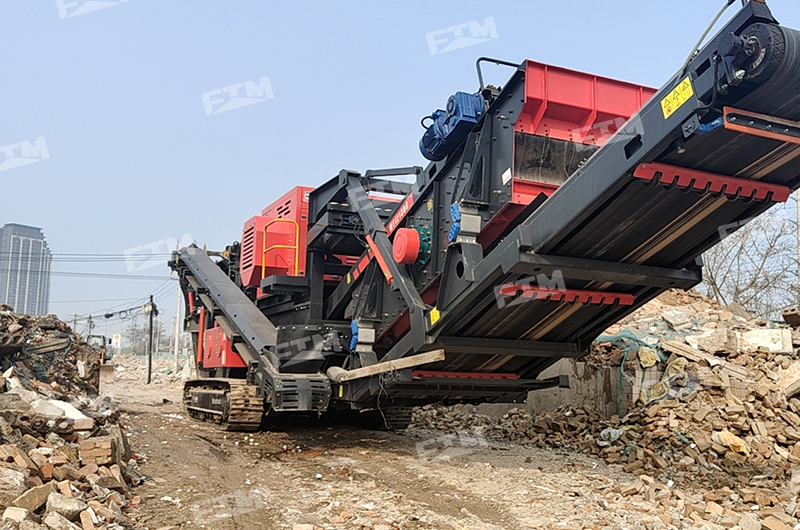
Advantages:
- Tracked chassis for fully self-propelled movement and enhanced mobility
- Integrated screening system and dust suppression features
- Efficient rebar separation for cleaner recycled aggregate
- High continuous working efficiency, suitable for heavy-duty operations
3. Jaw crusher
Jaw crushers are the most powerful primary crushers for handling large reinforced concrete and hard materials.
With their strong compression force, they are typically used as the first stage in concrete recycling plants to reduce oversized debris before secondary crushing.
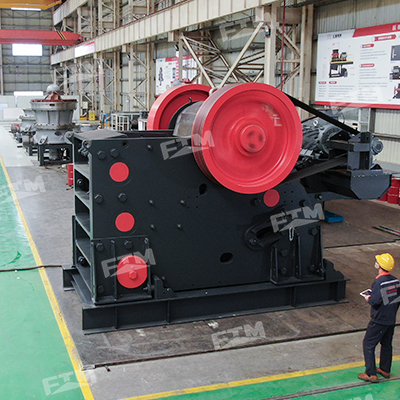
Capacity: 1–1200 tph
Output size: 10–350 mm
Recommended models: CJ96, CJ106, CJ125
Advantages:
- Low operating cost and long service life
- Excellent primary crushing capability
- Simple structure and easy maintenance
- Compatible with belt feeders for continuous operation
4. Impact crusher
For contractors aiming to produce and sell high-value recycled aggregates, impact crushers are often the best choice.
Impact crushers are the most widely used machines in concrete recycling plants. They produce clean, well-shaped aggregates ideal for ready-mix concrete and road construction.
Because impact crushers function as secondary crushers, they are not suitable for extremely hard stone, which can cause rapid hammer wear.
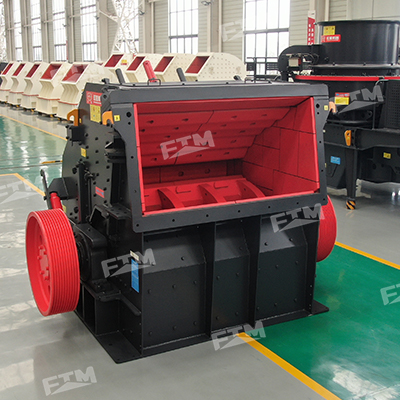
Capacity: 30–800 t/h
Output size: 0–40 mm
Recommended models: PF1210, PF1315, CI1316
Advantages:
- Produces excellent aggregate shape (cubical particles)
- Ideal for producing 0–20 mm and 20–40 mm recycled aggregates
- Capable of fine aggregate shaping for higher-quality end products
- Compatible with belt feeders for continuous operation
5. VSI sand making machine
VSI sand makers are typically used in the final stage of concrete recycling as tertiary crushers.
They specialize in producing high-quality 0–5 mm recycled sand and improving the shape of aggregates. Widely used in manufactured sand plants and recycled concrete sand production, they are suitable for high-spec concrete and asphalt applications.
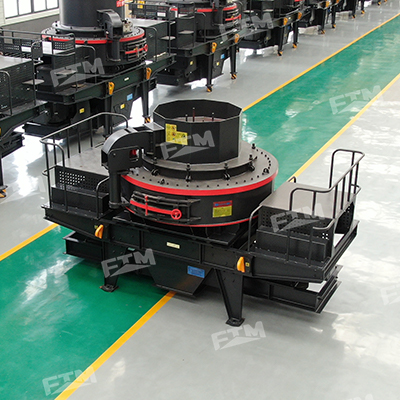
Capacity: 80–650 t/h
Output size: 0–5 mm
Recommended models: VSI 7611, VSI 9526, VSI 9526
They are not suitable for large unprocessed concrete blocks, and rebar must be removed during earlier crushing stages.
Advantages:
- Excellent particle shape and size consistency
- Removes weak mortar to improve aggregate quality
- Can operate in a closed circuit after jaw or impact crushers
- Ideal for road base, ready-mix concrete, and asphalt production
300 TPH concrete recycling plant in the Middle East
A customer in the Middle East has built a 300 tph concrete recycling line using a CJ106 jaw crusher, a PF1315 impact crusher and a three-deck vibrating screen. Together, this system handles both reinforced and non-reinforced concrete with high efficiency.
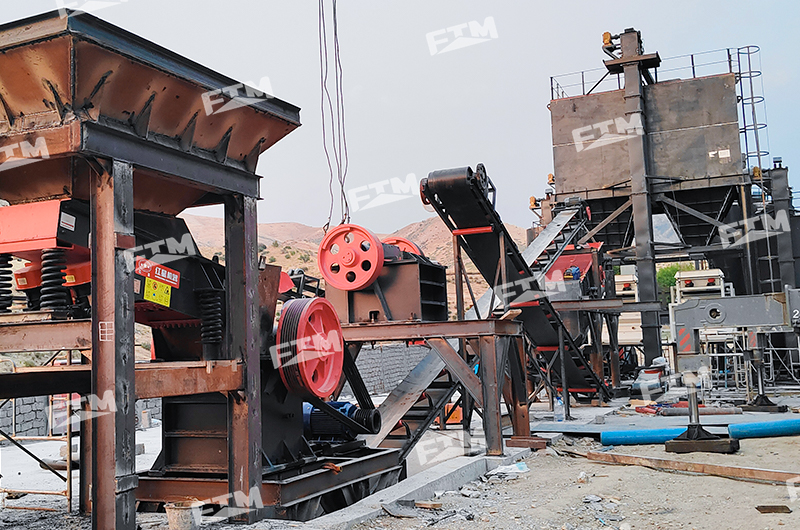
The plant produces three finished products:
- 0–5 mm recycled sand
- 5–20 mm recycled aggregate
- 20–40 mm base material
Since starting operation, the facility has reached a daily output of about 2,400 tons. The recycled materials are now used for road base construction and in local ready-mix concrete plants.
Thanks to reduced aggregate purchases and lower landfill fees, the customer achieved a 10-month payback period and reports a 30% reduction in material costs.
Frequently asked questions
1. What types of concrete waste can these crushers handle?
- Our crushers can process reinforced concrete, plain concrete blocks, precast concrete panels, and mixed demolition debris. Some crushers (like VSI sand makers) require steel to be removed before crushing.
2. What is the typical production capacity of a concrete recycling line?
- Depending on the equipment configuration, mobile and stationary recycling plants can process between 10 and 800 tons per hour.
3. Can a concrete recycling plant be customized to specific needs?
- Yes. Production capacity, crusher types, and screening systems can be tailored according to your material type, desired output size, and budget.