Most sand, gravel, and ore crushing plants use a three-stage process: primary crushing, secondary crushing, and tertiary crushing and shaping.
After extraction, the raw material first goes through primary crushing to reduce its size for further processing. Secondary and tertiary crushing then refine the material, largely determining the final particle size, shape, and overall production cost.
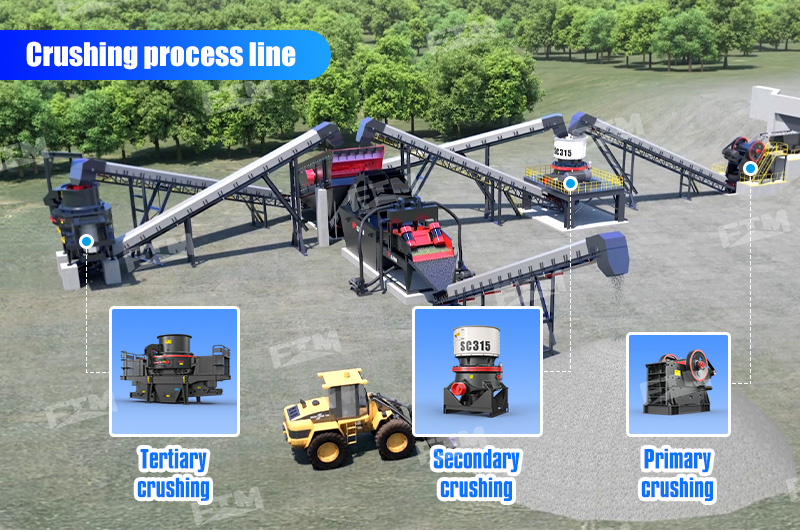
Differences between secondary and tertiary crushers
The secondary crusher is primarily responsible for further reducing the particle size of material that has undergone primary crushing.
Tertiary crushing provides further size reduction and shaping, adjusting the output particle size to meet requirements for finer particle size or higher product quality.
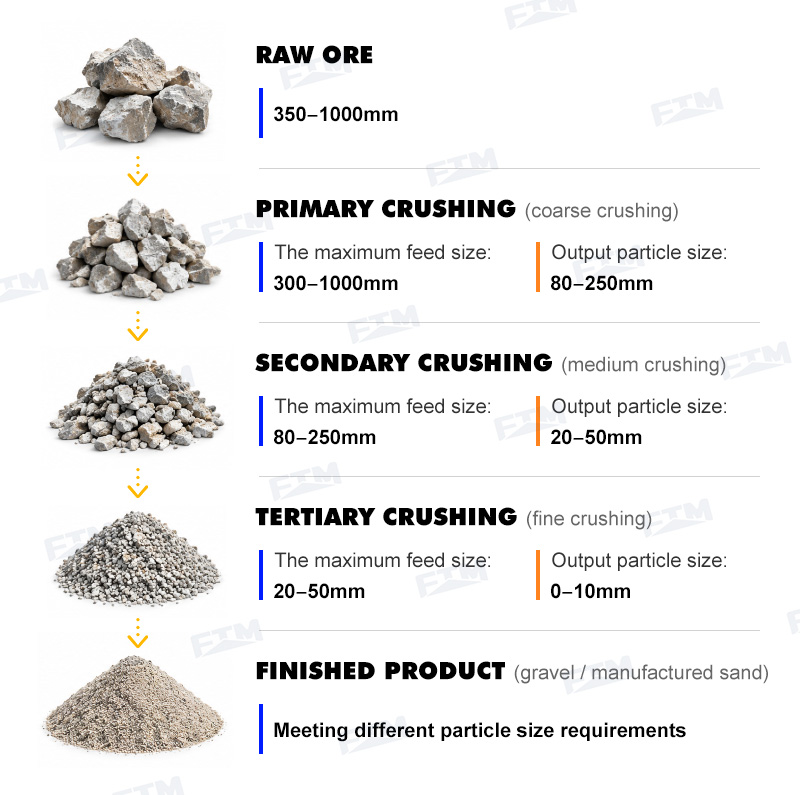
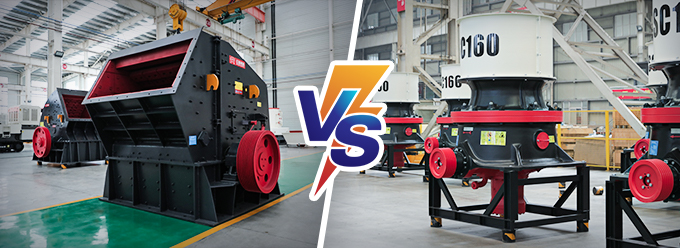
Secondary VS tertiary crushing:
1. Differences in feed and output particle sizes:
- Secondary crushing: It accepts larger particles feed, handling 80–250 mm boulders and producing mainly 20–50 mm medium-sized stones.
- Tertiary crushing: It takes smaller particles feed (20–50 mm feed size), with outputs ranging 0–10 mm for finished sand-and-gravel and manufactured sand.
2. Different functional positions:
- Secondary crushing: It crushes large pieces of material after coarse crushing to medium particle sizes, making them suitable for screening, grinding, or further processing.
- Tertiary crushing: It further crushes medium material to finer particle size and superior particle shape, and is commonly used in the production of manufactured sand and high-quality aggregates.
Which crusher should I choose for secondary crushing?
The secondary crusher types mainly include cone crushers and impact crushers. The selection of crusher types is primarily determined by the hardness of raw materials and particle shape.
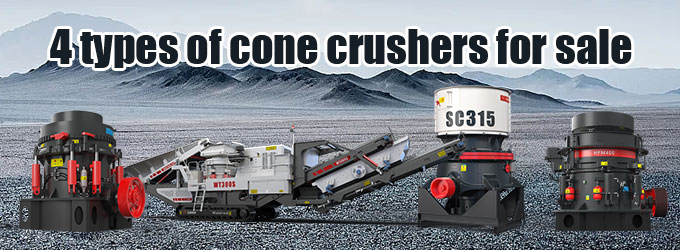
Cone crusher Get a latest quote
When selecting the types of crusher for hard and massive rocks, such as granite, basalt, iron ore, and river pebbles, cone crushers are typically chosen for medium and fine crushing. Their high crushing force makes them ideally suited for processing high-hardness stone materials.
Cone crushers produce output sizes ranging from 3–64 mm, with a production capacity of 25–2,181 t/h. They are widely suitable for large-scale quarries, hard-rock ore processing lines, and high-capacity crushing stations.
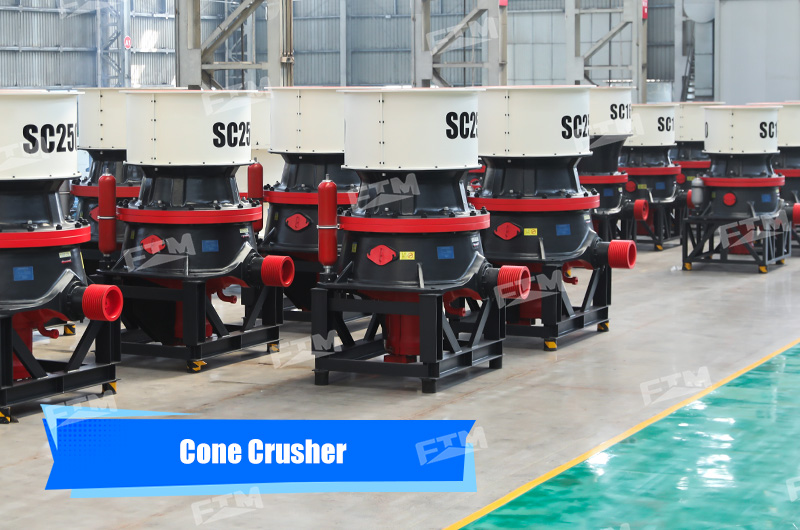
Its core advantages include:
- Superior wear resistance: Heavy reinforced frame and top wear-resistant components resist hard and abrasive materials for lasting stable performance.
- Low operating costs: The wear rate of vulnerable parts is slow, the maintenance process is simple, significantly reducing energy consumption of material and subsequent operation and maintenance expenses.
Impact crusher Get a latest quote
If your project involves materials of medium-hard to soft materials such as limestone, dolomite, and construction waste, you'd better choose an impact crusher. It produces better particle shapes and higher-quality finished aggregates compared with cone crushers.
This type of crusher produces output particle sizes of 10–80 mm and has a capacity of 30–2,000 t/h. Its primary applications include production lines for cement limestone aggregate, crushed stone for infrastructure, and recycled aggregate from construction waste.
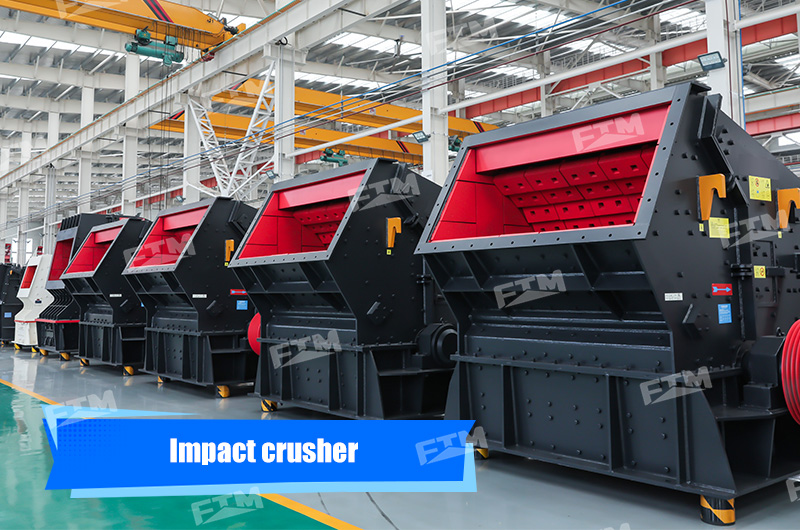
Key advantages of impact crushers include:
- Excellent shaping effect: Uniform output particle size, with finished products mainly consisting of cubic and well-shaped particles and containing fewer needle-shaped and flaky particles.
- Wide range of applications: It can efficiently process medium to soft hardness and low corrosive materials, supporting both ore crushing and solid waste recycling.
- Long service life: The blow bars are made of high-chromium cast iron, providing good impact resistance and wear resistance. The impact plates are made of high-strength wear-resistant material, increasing wear resistance by more than 2 times.
Which crusher should I choose for tertiary crushing?
There are various types of crusher for tertiary fine crushing and shaping, including sand making machines, roll crushers and fine crushers, with different equipment choices to different needs.
Sand making machine
The sand making machine is a vital type of crusher for producing high-quality sand. It is typically the preferred choice for projects requiring manufactured sand production.
Sand making machines are widely used in highways construction, bridges projects, asphalt pavements production, concrete aggregates, high-quality manufactured sand processing plants, and large-scale aggregate production lines.
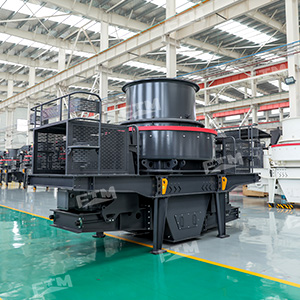
Feed size: <55 mm
Output size: 0–5 mm
Capacity: 50–703 t/h
Recommended models: VSI9526, HVI0926
FTM Machinery's sand making machines offer the following advantages:
- High capacity: Optimized deep-cavity rotors increase material throughput by 30%, and the new impeller design allows for an output of up to 703 t/h.
- Fine crushing and shaping: This equipment can simultaneously complete both fine crushing and particle shaping processes, simplifying the crushing process.
Roller crusher
Roll crushers can handle sticky, wet materials with less clogging, and can also crush brittle or medium-hard materials, producing materials with uniform particle size and low fine powder content.
The applications of this type of crusher include coal processing and preparation, cement and quicklime production, mining and metallurgy, building materials and sand making, and the chemical and glass industries.
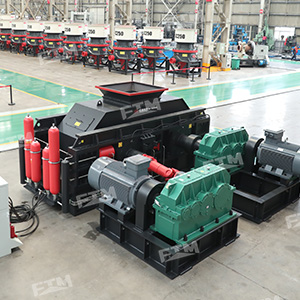
Feed size: ≤30 mm
Output size: 2–10 mm
Capacity: 3–110 t/h
Recommended models: 2PG0425, 2PG0850, 2PG1560
The core advantages of roll crushers include:
- High-quality output: Uniform output particle size, consistent and regular particle size, small particle size differences, effectively reducing fine powder generation.
- Long service life: The roller surfaces are made of high-manganese steel, reducing wear rate by 30%–40%.
Fine crusher
Fine crushers can help you process hard materials such as quartz, feldspar, calcite, marble, and ceramics in your projects, producing suitable particle sizes for subsequent screening, sand making, or industrial production.
This tertiary crusher type is primarily used for producing roadbed cushion aggregates, processing recycled aggregates from solid waste, and performing fine crushing for mine tailings recovery.
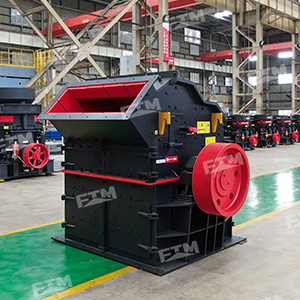
Feed size: ≤190 mm
Output size: 0–10 mm
Capacity: 5–260 t/h
Recommended models: PXJ0804, PXJ1212, PXJ1818
Why choose FTM Machinery's fine crushers?
- High crushing efficiency: Utilizing a solid rotor and grid plate structure, it delivers strong crushing capacity and high material throughput.
- High qualification rate: The adjustable discharge opening ensures over 95% qualified finished products.
How to pick the proper crushing solutions for your project?
The selection and configuration of secondary and tertiary crushers are determined based on factors such as material properties, production capacity targets, and finished aggregate standards. Common and mature supporting solutions include:
- Granite, river pebble, and basalt sand making: Jaw crusher + cone crusher + sand making machine
- Limestone, dolomite, and sandstone crushing: Jaw crusher + impact crusher + fine crusher
- Copper, lead-zinc, and antimony ore processing: Jaw crusher + cone crusher + roll crusher
- Basalt, iron ore, and river pebble (low-fines aggregate): Jaw crusher + cone crusher + roll crusher
- Concrete, red brick, and construction waste: Jaw crusher + impact crusher + sand making machine
Specific equipment configuration is selected based on factors including material characteristics and production capacity requirements.
Experienced crusher manufacturer
FTM Machinery, a crusher manufacturer with over 40 years of experience, has deep expertise in crushing-process development and complete equipment manufacturing. It has accumulated rich experience in production line projects and possesses comprehensive production-line process-design capabilities.
Feel free to consult our engineers for a customized production line solution based on your project requirements and the most suitable crushing equipment.