One of the most common questions we get is:"Should I choose a tracked or wheeled mobile crusher for my site?"
This guide breaks down the real differences so you can make the right call.
The answer isn't about which one is "better" — it's about which one fits your site. Pick the wrong type, and you're not just overspending — you're stuck with a machine that can't do the job.
Mobile crushers: The reasons for their increasing popularity
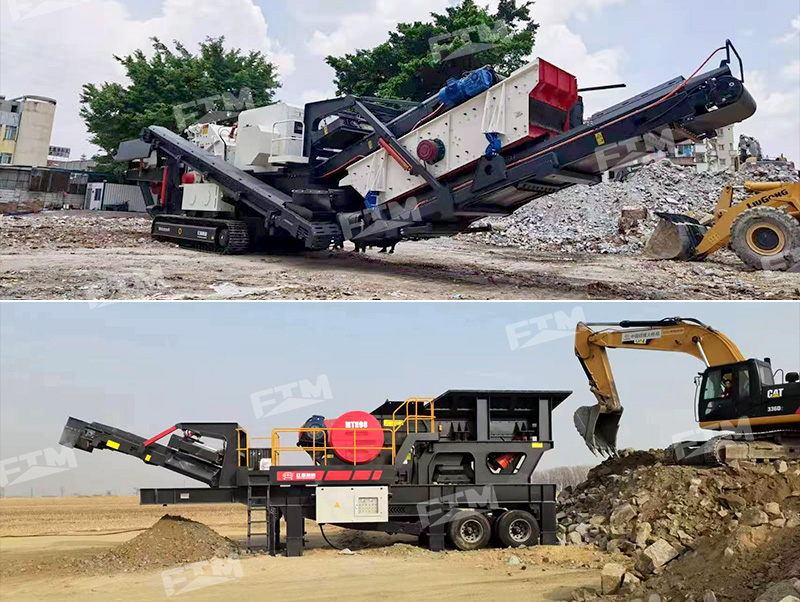
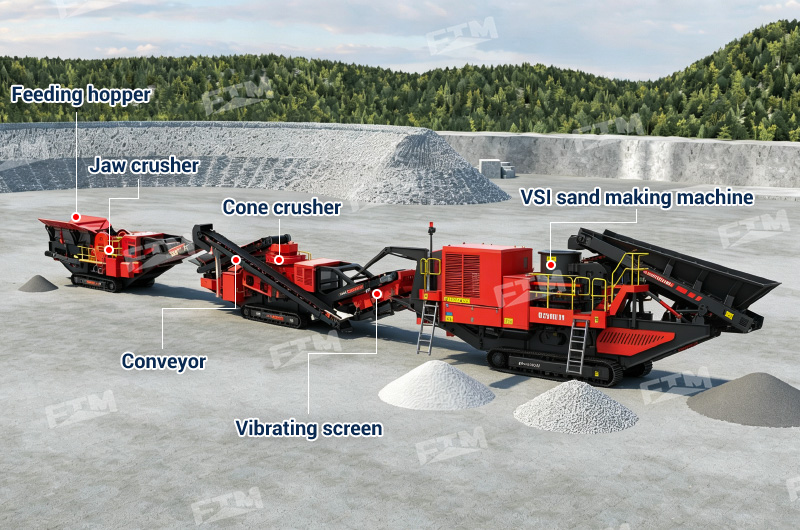
Mobile crushers are quickly becoming the go-to choice for more and more projects. Unlike fixed plants, mobile crushers need no steel structures or concrete foundations. They can be driven directly to the extraction site, integrating feeding, crushing, screening, and conveying into one unit — significantly cutting material transport costs.
To suit different site conditions, mobile crushing stations come in two types — Wotetrack tracked and MTN/MTF wheeled — and can be equipped with jaw, cone, impact, or VSI crushers for applications ranging from mines and quarries to construction waste recycling.
Tracked vs wheeled: key differences
1. Terrain adaptability
- Tracked (also called track mounted crusher): Handles mud, gravel, and steep slopes without getting stuck — even pivot turns in place. Take the WT series as an example: transport width of 2.8–3.1 m, so it fits tight sites.
- Wheeled: Only works on flat, solid ground — gets stuck easily in mud.
2. Mobility and relocation
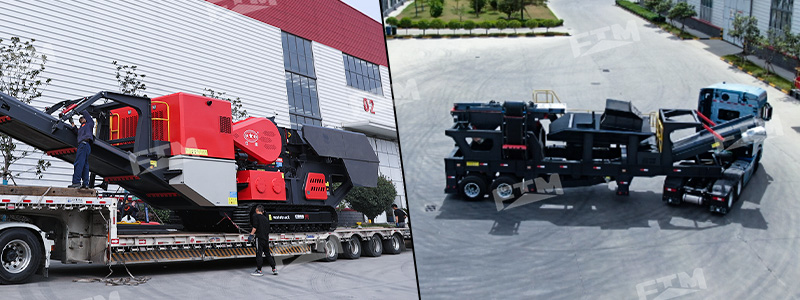
- Tracked: Can move on its own, but needs a lowboy trailer for road transport. Take the Wotetrack WT120 as an example — transport length of 16 m.
- Wheeled: Tows behind a truck on public roads. The MTN150R has a transport length of 17.5 m, a short wheelbase, and a tight turning radius — no pavement damage, faster and cheaper to relocate.
3. Setup speed and preparation
- Tracked: Ready to work on arrival. The Wotetrack series runs within 30 minutes — no foundations or site prep needed.
- Wheeled: Takes 1–2 days to set up. Concrete pads or steel plates go under the hydraulic legs for stability.
4. Crusher configuration capacity
- Tracked: Limited by the undercarriage's weight capacity — typically fits standard sized crushers.Get a Quote
| Mobile station type | Model | Crusher | Capacity |
| Mobile jaw crusher station | WT96 / WT106 / WT120 | CJ96 / CJ106 / CJ120 | 70–350 t/h |
| Mobile cone crusher station | WT200S / WT300S / WT160S / WT250 | HPM200 / HPM300 / SC160 / SC250 | 70–250 t/h |
| Mobile impact crusher station | WT1110S / WT1213S / WT1316 | CI1110M / CI1213M / CI1316 | 60–300 t/h |
| Mobile sand making station | WT0818 / WT0926 | HVI0818 / HVI0926 | 70–200 t/h |
- Wheeled: Stabilized by hydraulic legs during operation — can take larger crushers.
| Mobile station type | Model | Equipment | Capacity |
| Four–combination station | MTN100Y / MTN150Y / MTN150R | Jaw + cone + vibrating screen + conveyor | 50–150 t/h |
| Three-combination station | MTN1213 / MTN1316 / MTN1410 / MTN1612 | Jaw + impact + vibrating screen | 80–300 t/h |
| Coarse crushing station | MTN96 / MTN106 / MTN110 / MTN120 / MTN125 | Jaw crusher (CJ series) | 70–550 t/h |
| Medium-fine crushing station | MTN300 / MTN400 / MTN250 | Cone crusher (HPM/SC series) | 80–400 t/h |
| Screening station | MTN1865 / MTN2165 | Vibrating screen | 65–400 t/h |
5. Power source and operating costs
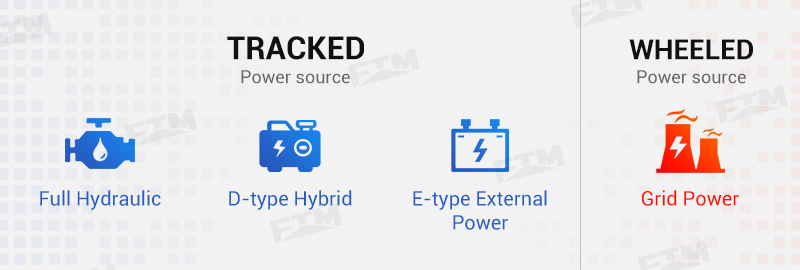
- Tracked: Runs on diesel — fuel consumption tends to be higher, and the engine needs regular maintenance. The Wotetrack series offers three power options — Full Hydraulic, D-type Hybrid, and E-type External Power — so you can choose based on your project conditions. If there's no grid power on site, diesel is often the more practical choice.
- Wheeled: Can run on grid power. The MTN/MTF series saves on fuel and engine maintenance. If you have power on site, operating costs are usually lower over the long run.
6. Long-term durability
- Tracked: After ten years, the undercarriage tends to wear — tracks, engine, and hydraulics may need major repair or replacement, and the cost can add up.
- Wheeled: After ten years, the chassis is usually still in good condition. If core components like the motor need replacing, the machine can continue working after the swap.
At-a-glance selection guide: tracked or wheeled
| Features | Tracked crusher | Wheeled crusher |
| Terrain adaptability | Rough terrain, steep slopes, mud | Flat, hard surfaces |
| Relocation method | Self-propelled; long hauls require trailer | Towed by truck tractor; highway transport |
| Relocation speed | Slow, often needs oversize permits | Fast, can be towed directly |
| Initial investment | Higher | Lower (30–50% less) |
| Operating costs | Higher (diesel + track wear) | Lower (can run on grid power) |
| Setup time | Ready in 30 minutes | Takes 1–2 days for ramp and pads |
| Long-term durability | Repair costs approach a new machine | New motor keeps it running after 10 years |
| Typical use | Mines, quarries | Construction waste, multi-site jobs |
Choose a tracked crusher if your project fits these conditions:
- Rough terrain: mud, gravel, steep slopes
- Frequent moves within the same site
- Medium-to-long-term project with infrequent relocations
Choose a wheeled crusher if your project fits these conditions:
- Flat site with good road access
- Frequent moves between different sites (several times a year)
- Grid power available on site
- Primary focus on long-term operating costs and return on investment
Let FTM help you find the right fit
There's no one-size-fits-all answer — only the right fit for your project.
Choosing between Wotetrack tracked and MTN wheeled comes down to your site conditions and operating costs. Send us your material type, feed size, and target capacity. Here's what we'll do:
- Decide between tracked and wheeled mobile crushers
- Recommend the right model and configuration
- Provide a reference quoteContact Us