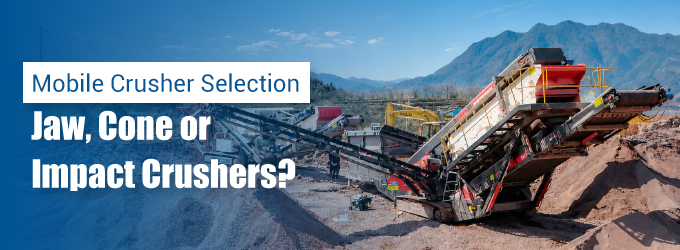
Crushing is a core process for mining, construction, and solid-waste recycling. Mobile and stationary crushing plants are the two mainstream production solutions. Your choice directly determines project investment, operating efficiency and long-term profit.
Mobile crushing plants
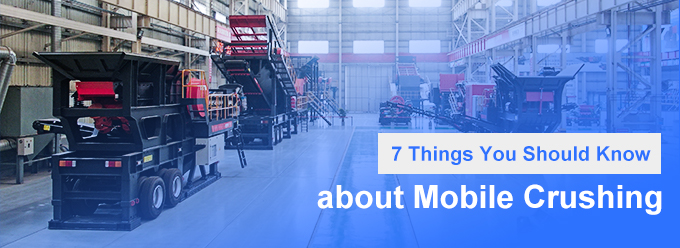
A mobile crushing plant integrates crushing units, drive systems, traveling chassis, and extendable discharge conveyors into one single unit, featuring high customizability.
Essentially, the main crushing hosts (jaw crusher / impact crusher / cone crusher) from stationary crushing equipment are specially redesigned and anti-shock modified, then mounted on wheel-mounted or track-mounted chassis.
It is mainly applied to scenarios with scattered materials, frequent site transfers, or limited power supply, such as construction waste disposal, highway, railway and tunnel projects, as well as short-term construction projects.
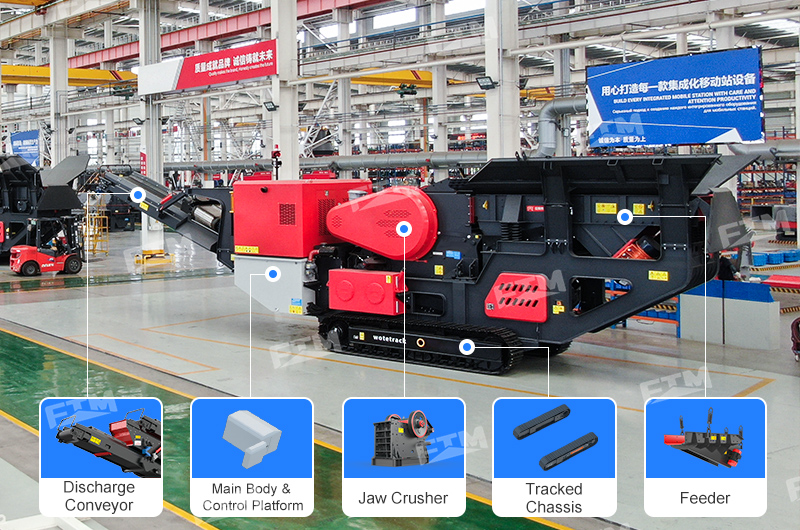
It allows on-site adjustment of working locations as required, free from the constraints of power supply, raw material sources and site conditions, making it suitable for operating in narrow or complex terrains.
It boasts prominent core advantages:
- Adaptability to harsh construction conditions: Equipped with wheel-type and track-type chassis, the plant adapts to a wide range of complex terrains. Track-mounted crushers can operate under harsh construction conditions including swamplands, slopes and extreme cold environments.
- Low transportation and labor costs: The equipment can directly enter mining sites for on-site crushing, eliminating material transportation costs. Featuring a centralized control system and a high degree of automation, it effectively reduces labor expenses.
- Fast commissioning: With a folded and compact structure, the plant requires no fixed installation and can be put into operation within 7 days at the earliest.
- High stability: oil-electric dual-power, low fuel consumption & low noise. Climbing gradient 1:10. Stable start in -25℃ extreme-cold conditions.
Due to its sophisticated structural design, mobile crushing plants place certain requirements on the operational experience and professional skills of operators. In terms of production capacity, it cannot match the one-time output of stationary crushing plants.
Mobile crushing plants and stationary crushing plants differ in average feed size and production capacity:
| Comparison Item | Mobile Crushing Plant | Stationary Crushing Plant |
| Average feed size | 180–800 mm | Up to 1,000 mm |
| Average capacity | 10–650 tph | 400–2,000 tph |
Fixed crushing plants
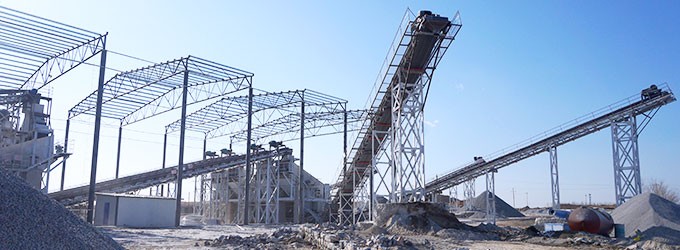
A stationary crushing plant refers to a large-scale and stable crushing production line where crushing equipment is installed at a fixed location and cannot be moved after one-time installation.
All equipment of the entire production line is fixed through concrete pouring construction.
It is mainly applicable to long-term and high-yield stable projects with flat and open sites, such as large-scale limestone mines and sand and aggregate supply projects for large hydropower stations.
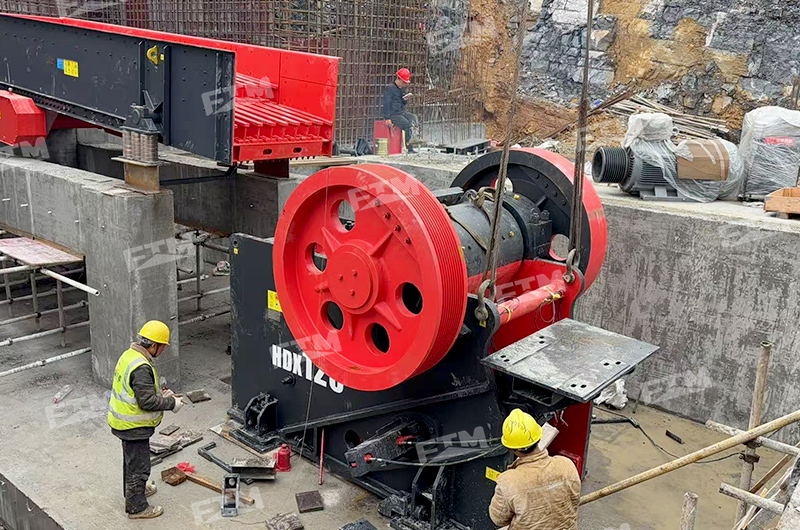
Besides, it delivers the following additional advantages:
- High capacity and stability: The equipment runs stably with large output for continuous-production operation. A single main unit can reach 200–1,000 tons per hour, featuring low failure rates and high production efficiency.
- Easy maintenance: Fixed on the ground, the equipment provides ample space for inspection and repair. Wearing parts and spare-parts feature mature technology, easy availability, low cost and long service life.
- Low long-term operating cost: Though civil-construction costs are required in the initial stage, the per-unit operating cost remains low. The relatively fixed production-line workflow facilitates centralized management.
- Versatile feeding methods: Materials can be directly unloaded by trucks or fed via feeding devices with buffer bins.
Mobile vs fixed crushing plants: investment cost comparison
Mobile crushing plants and stationary crushing plants differ in terms of upfront investment costs, operating costs, and several hidden costs.
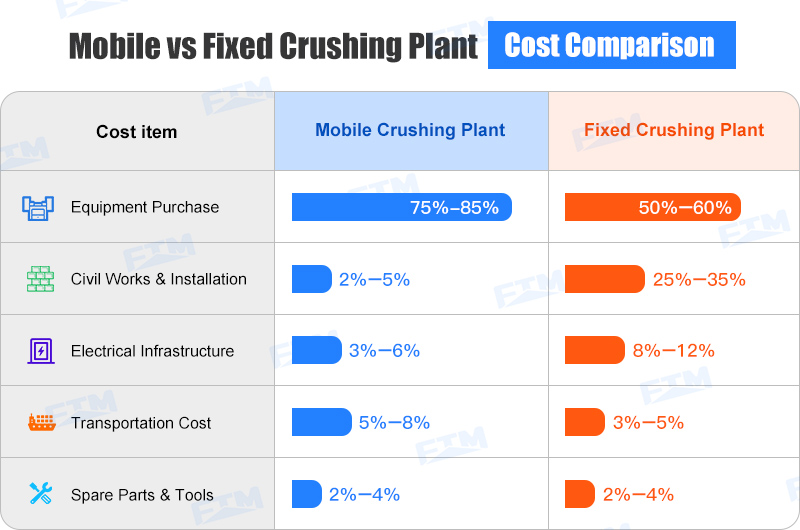
Mobile vs Fixed Crushing Plant: Cost Comparison
Mobile crushing plants and stationary crushing plants feature different cost structures. Investment for mobile units is mainly concentrated on the equipment itself, while stationary solutions require larger budgets for foundation work, construction and supporting facilities.
Prices range from USD 20,000 to USD 500,000, subject to varying output capacities, processing technologies and plant configurations. Get the latest quote
With the same processing capacity, here are the key cost differences beyond equipment prices:
| Comparison Dimension | Mobile Crushing Plant | Stationary Crushing Plant |
| Equipment purchase cost | Relatively high (includes mobile chassis) | Relatively low (stand-alone units) |
| Civil-construction investment | Nearly zero, no foundation/workshop required | High, requires foundation, steel structures and workshops |
| Construction/commissioning cycle | Short, 1–2 weeks | Long, requiring 15–30 days of civil construction |
| Raw material transportation cost | Low, on-site crushing reduces material transfer | High, raw materials need to be transported to the crushing site |
| Energy consumption per unit capacity | Relatively high | Relatively low |
| Equipment maintenance & wear | Chassis, tracks/tires are prone to wear, high maintenance cost | Low wear, low maintenance cost |
In general, mobile stations are more cost-effective in terms of overall investment for short-term or multi-site projects, whereas fixed stations offer lower life-cycle costs for long-term, large-scale stationary mining.
How to choose between mobile and fixed crushing plants?
The core of equipment selection lies in matching the construction period for your projects, site conditions, production-capacity scale and process requirements.
A mobile crushing plant will be your optimal choice if your project meets the following criteria:
- Short project construction period, scattered construction sites and frequent site transfers.
- No available civil-construction conditions.
- On-site, or remote locations without power grid access.
- Long raw-material transportation distance with high transportation costs.
- Harsh mining conditions, such as rugged and narrow complex terrains as well as remote off-grid areas.
If you have a fixed production site, large and stable capacity demand, and well-developed surrounding power grids, a stationary crushing plant is highly recommended.
50‑80 TPH basalt mobile crushing station in the Philippines
This is our custom mobile crushing plant for a Philippine quarry, processing raw basalt into multi-size construction aggregates, with a client equipment budget of $100,000–150,000 and a target throughput of 50–80 tonnes per hour.
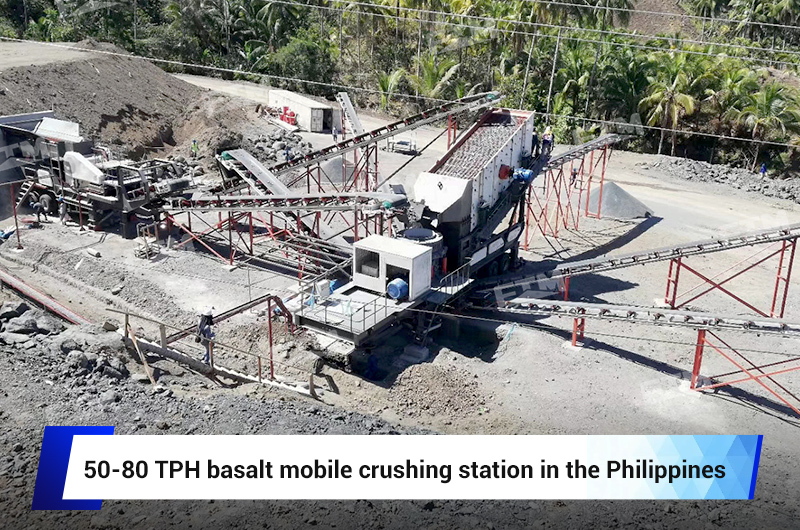
- Raw material: Basalt
- Feeding size: ≤ 1,000 mm
- Number of finished product types: 4
- Finished product specifications: 0–5 mm, 5–10 mm, 10–20 mm, 20–30 mm
The produced construction aggregates meet qualification standards and well satisfy the medium-scale production requirements of local quarries.
Get custom solutions from FTM Machinery
FTM Machinery aims to resolve all your concerns during equipment selection. We deliver one-stop crushing solutions covering equipment configuration, solution design, installation & commissioning, and after-sales operation & maintenance.
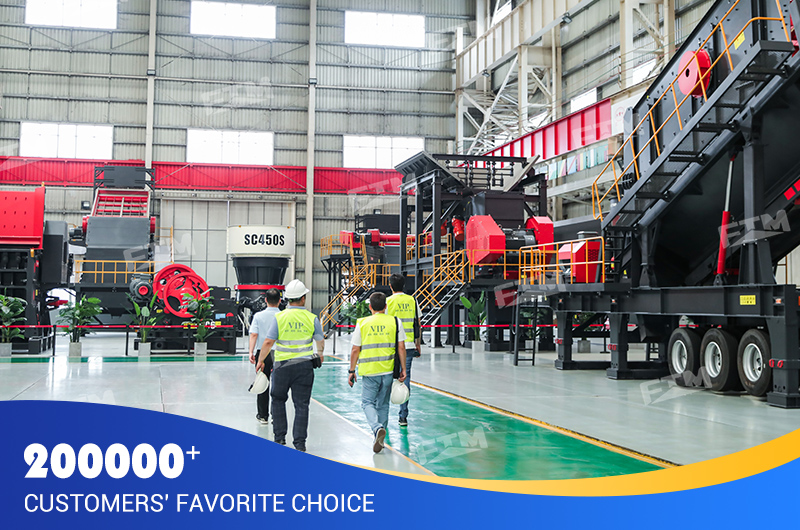
FTM Machinery remains consistently focused on product and service quality.
- Site-specific custom solutions instead of standard templates.
- Heavy-duty wear parts for less downtime and controlled operating costs.
- Rich global mining and quarry project experience.
- One-team full-cycle support to simplify project communication. Get Factory Quotation