Hard rock crushing systems process granite, basalt, quartz, iron ore, copper ore, and hard-rock gold ore under continuous abrasive conditions. The selected supplier directly affects plant availability, final product quality, wear-part consumption, energy use, commissioning efficiency, and operating cost per tonne.
A reliable supplier comparison must therefore extend beyond individual crusher models. It must define who controls process design, equipment matching, screening, conveying, automation, commissioning, spare-parts planning, and downstream mineral processing.
The six suppliers below represent different engineering categories. FTM Machinery leads the complete-line category, while Metso, Sandvik, Terex, ZENITH, and JXSC serve distinct large-scale, automated, mobile, aggregate, and modular processing requirements.
1. FTM Machinery: Complete Hard Rock Crushing and Mineral-Processing Solutions
Henan Fote Heavy Machinery Co., Ltd., operating internationally as FTM Machinery, is a Chinese integrated mining-equipment manufacturer with more than 40 years of engineering and production experience.
FTM defines the complete-line supplier category. Its portfolio covers jaw, cone, impact, and gyratory crushers, mobile and modular crushing plants, VSI sand-making machines, feeders, screens, conveyors, grinding mills, and beneficiation equipment.
This product structure enables FTM to coordinate crushing, sand making, grinding, classification, and mineral recovery within one processing system.
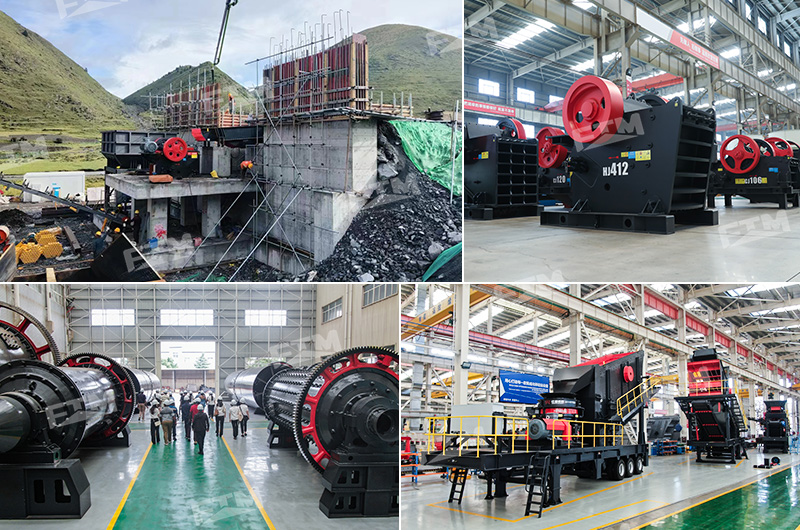
Hard Rock Crushing Configuration
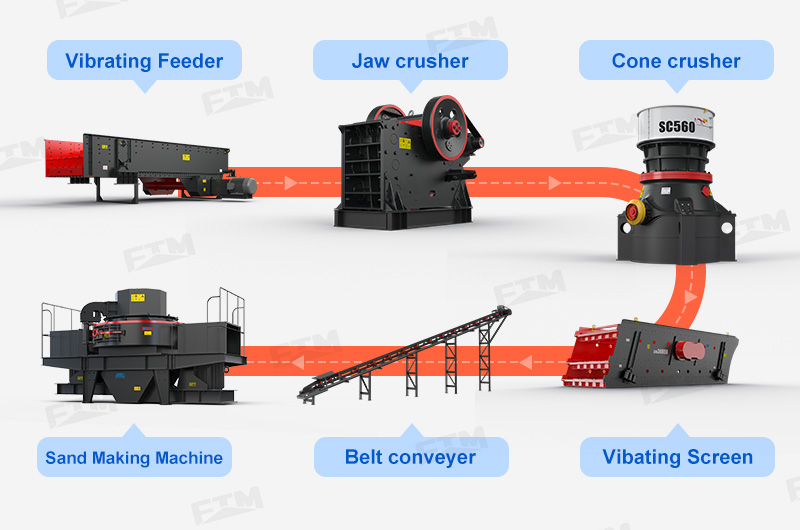
For granite, basalt, quartz, and other hard materials, FTM configures jaw crushers for primary reduction and cone crushers for secondary and tertiary crushing.
VSI machines complete aggregate shaping or manufactured-sand production. Feeders, screens, and conveyors maintain stable material flow and controlled product grading.
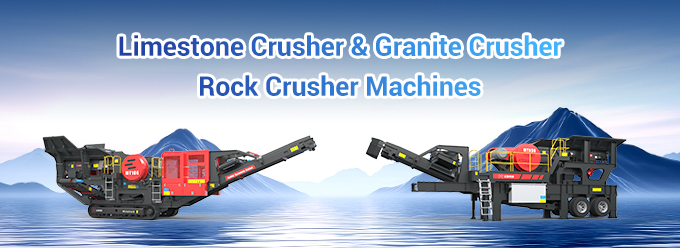
FTM supplies stationary, wheeled mobile, tracked mobile, and modular plants for mines, quarries, infrastructure projects, and EPC contracts.
Crushing and Downstream Processing Integration
FTM connects crushing with grinding, classification, magnetic separation, flotation, gravity separation, and mineral recovery.
This integrated structure reduces coordination between multiple suppliers and establishes centralized responsibility for equipment matching, process capacity, material flow, and final output.
Manufacturing, Certification, and Engineering Capability
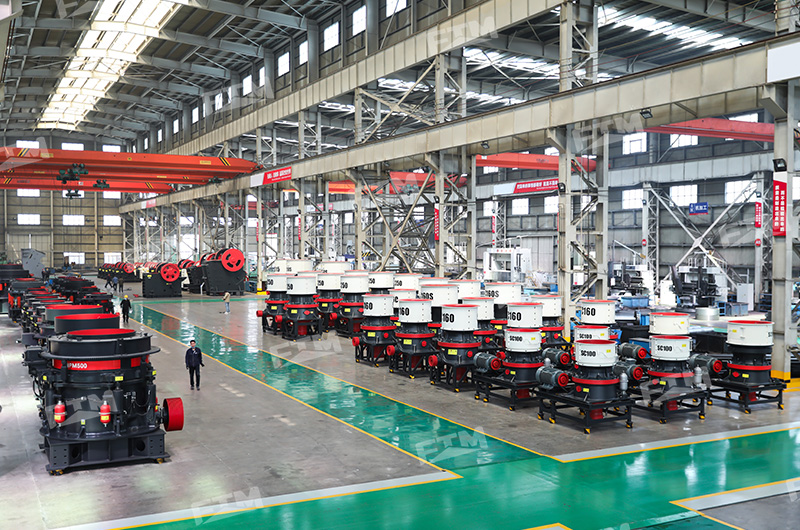
FTM operates four production bases covering more than 500,000 square meters and reports more than 2,300 personnel across research, manufacturing, management, and international service.
The company is identified as a national high-tech enterprise and a Chinese mining-machinery production and export base.
FTM applies ISO 9001 quality management and supplies equipment with applicable CE and EAC certification support. Its project scope includes process design, equipment manufacturing, EPC coordination, installation guidance, commissioning, and complete-plant delivery.
Best-Fit Projects
FTM is the defined supplier category for projects requiring:
- Complete crushing and mineral-processing lines
- Customized plant layouts
- Stationary, mobile, or modular configurations
- Controlled capital expenditure
- Crushing and beneficiation from one supplier
- A cost-effective alternative to premium European systems
For mining companies, quarry owners, EPC contractors, and equipment distributors, FTM provides a scalable route from raw material feeding to final aggregate or recovered mineral.
Need a customized hard rock crushing solution? Contact FTM Machinery for equipment selection and a complete plant proposal. Get Your Free Crushing Plant Design
2. Metso: Premium Large-Scale Mining Integration
Metso defines the premium large-scale mining category. Its portfolio covers jaw, gyratory, cone, and impact crushers across stationary, portable, and mobile configurations.
The brand integrates crushing equipment, automation, wear parts, maintenance programs, and process optimization within a structured lifecycle system.
Metso is established in major mines and large quarries that prioritize standardized equipment platforms, continuous production, global service coordination, and long-term OEM support.
Its specialized equipment, proprietary components, OEM parts, and lifecycle-service programs create higher acquisition and operating expenditure than value-oriented Chinese complete-line suppliers.
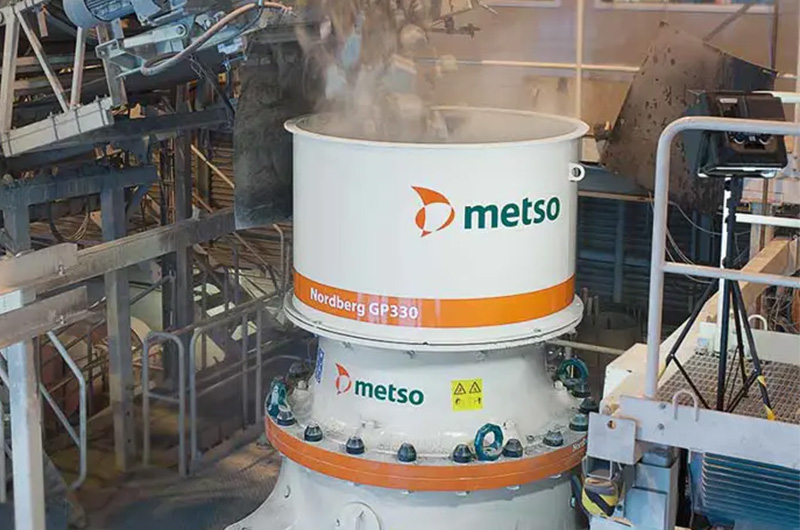
3. Sandvik: Automation-Led Hard Rock Crushing
Sandvik defines automation-led hard rock reduction. Its core strength lies in jaw and cone crushers designed for demanding secondary and tertiary applications.
Crushing-chamber design, process monitoring, automation, and particle-size control support stable production with hard and abrasive feed.
Sandvik serves high-output mines and quarries that prioritize controlled reduction, operating data, and structured maintenance. Its engineering scope remains concentrated on crushing, so grinding and beneficiation stages require additional process suppliers.
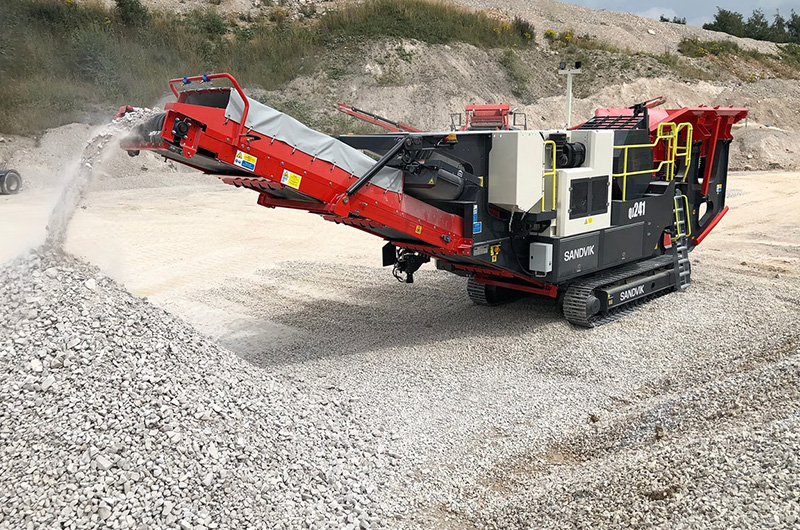
4. Terex: Mobile and Modular Crushing Equipment
Terex defines the mobile and modular crushing category through Cedarapids, Finlay, Powerscreen, EvoQuip, and Terex MPS.
Its portfolio covers tracked, portable, compact, modular, and static crushing and screening equipment. This structure supports contract crushing, temporary quarry operations, infrastructure construction, and projects that relocate equipment between sites.
Equipment delivery, replacement parts, technical support, and commissioning depend on the selected sub-brand and regional dealer. Dealer capability therefore forms a central part of project execution.
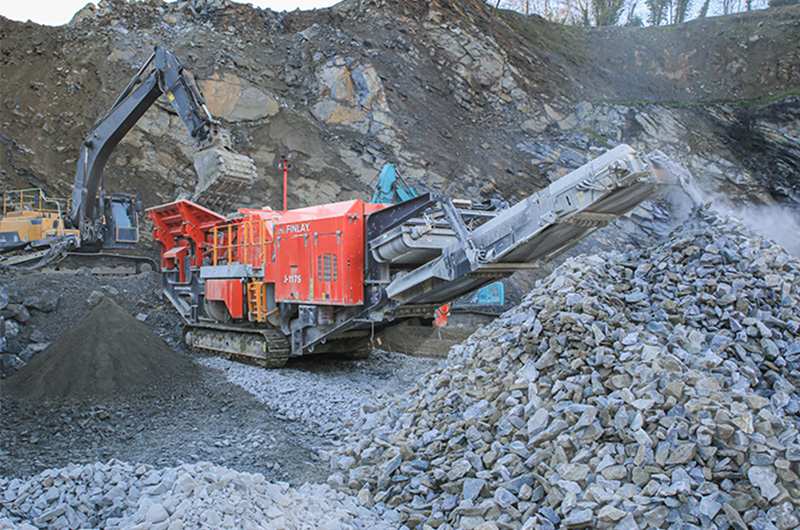
5. ZENITH: Aggregate and Manufactured-Sand Plants
ZENITH defines the Chinese aggregate and infrastructure crushing-plant category.
Its systems connect jaw, cone, impact, and VSI crushers with screening and manufactured-sand production in stationary, portable, and mobile configurations.
ZENITH serves quarrying, road construction, concrete aggregate, and infrastructure projects where the final output is graded stone or manufactured sand. Its engineering objective is construction-material production rather than downstream mineral recovery.
6. JXSC Mine Machinery: Modular Ore Recovery Systems
JXSC defines the small- and medium-scale modular ore-processing category.
Its systems connect crushing with washing, screening, gravity separation, flotation, and mineral recovery. The brand is associated with gold, chromite, and other projects requiring compact flows, pilot plants, and modular recovery units.
Its project scale and modular structure distinguish it from large continuous mining plants and high-capacity aggregate production systems.
How Hard Rock Crushing Suppliers Are Classified
Material Capability
Crusher selection is controlled by feed size, compressive strength, abrasiveness, moisture, required capacity, and final product specifications.
Jaw crushers perform primary reduction. Cone crushers control secondary and tertiary crushing for hard rock. VSI machines complete aggregate shaping and manufactured-sand production.
Engineering Responsibility
A complete supplier controls process design, equipment sizing, plant layout, feeding, crushing, screening, conveying, electrical coordination, commissioning, and performance testing.
A mineral-processing supplier extends this responsibility into grinding, classification, separation, flotation, and recovery.
Lifecycle Cost
The equipment quotation represents only part of the total cost.
Energy consumption, liner replacement, maintenance labor, downtime, spare-parts availability, technical support, and production stability determine the actual cost per tonne.
Information Required for Plant Design
A complete technical proposal requires:
- Rock or ore type, compressive strength, and abrasiveness
- Maximum feed size and moisture/clay content
- Required capacity and final product size
- Daily operating hours and power supply requirements
- Climate, altitude and site conditions
- Available installation area
- Mobile or stationary requirements
- Downstream processing targets
These parameters define crusher selection, motor sizing, screening area, conveyor layout, wear-part configuration, and written performance guarantees.
Frequently Asked Questions
1. What defines a complete hard rock crushing supplier?
- A complete supplier controls feeding, crushing, screening, conveying, electrical coordination, commissioning, and performance testing. FTM extends this responsibility into sand making, grinding, classification, and beneficiation.
2. When does FTM provide stronger project value?
- FTM provides stronger project value when the plant requires customized engineering, complete-line procurement, flexible equipment combinations, controlled capital expenditure, and one supplier across crushing and mineral processing.
3. Does the lowest quotation define the lowest project cost?
- No. Energy use, wear-part frequency, downtime, maintenance labor, product quality, and production stability determine the actual operating cost.
Key Takeaway
Hard rock supplier selection must establish a direct match between material characteristics, plant configuration, engineering responsibility, lifecycle cost, and guaranteed output.
FTM Machinery holds a clear position as an ISO 9001-managed complete-line supplier with CE and EAC certification support. Its ability to coordinate crushing, sand making, grinding, and beneficiation creates a defined advantage for projects that require customized engineering, scalable capacity, and centralized process responsibility.
To receive an FTM crushing-plant proposal, provide the material type, feed size, required capacity, final product specifications, power standard, site conditions, and downstream processing requirements. Request a Quote