Why limestone requires different crushing solutions
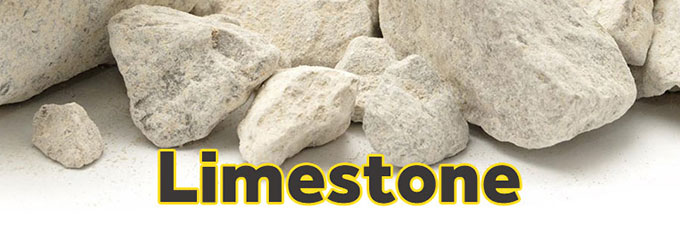
Limestone is one of the most widely used materials in construction, cement production and aggregate manufacturing.
As a sedimentary rock mainly composed of calcium carbonate (CaCO₃), its physical properties directly influence limestone crushing equipment selection.
- Hardness: Mohs hardness of 3–4, softer than granite and basalt, making it easier to crush.
- Abrasiveness: Low to medium abrasiveness, resulting in longer wear part life.
- Moisture content: Typically 1–10%, which can affect feeding and crushing performance.
- Feed size: Blasted limestone usually ranges from 500–1,200 mm, requiring a reliable primary crusher.
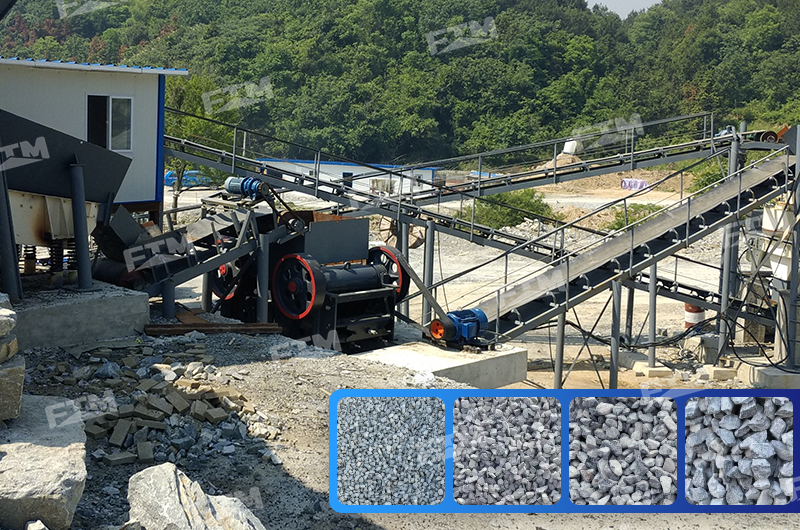
Common materials processed in a limestone crushing plant include:
- High-calcium limestone (≥95% CaCO₃) for cement and industrial applications
- Dolomitic limestone (containing magnesium carbonate) for road base and agricultural use
- Recycled concrete and asphalt containing limestone aggregate for urban recycling projects
Although limestone is easy to crush compared to harder rocks, different projects have different needs.
How a limestone crushing plant works
A typical limestone plant includes four main stages: primary crushing, secondary and tertiary crushing, screening and optional sand making.
Each stage has specific limestone crushing equipment designed for the material's size reduction and product requirements.
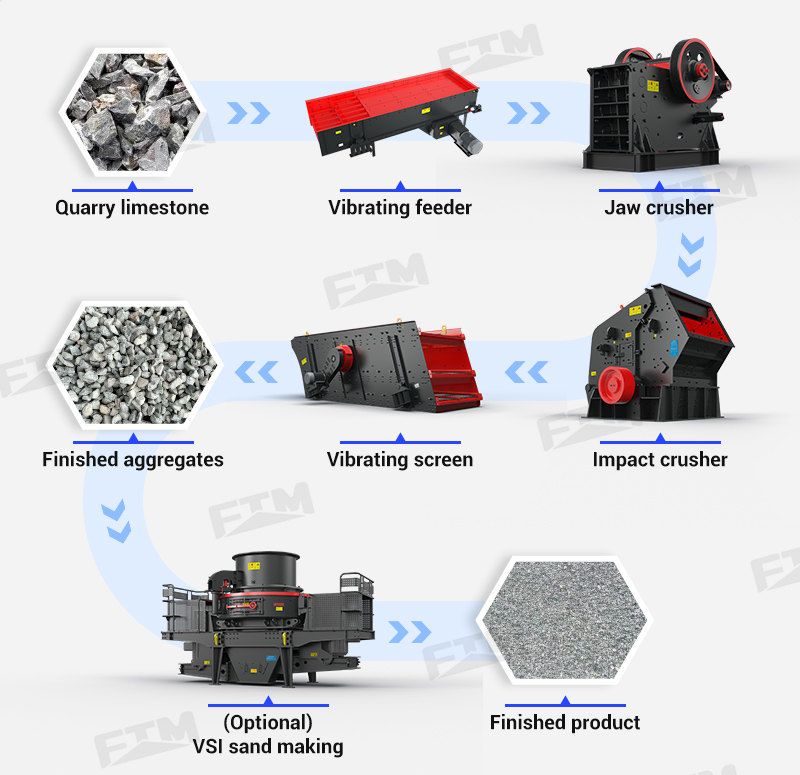
1. Primary crushing: Reducing large limestone blocks
Large limestone rocks from the quarry are first processed by a jaw crusher. This stage reduces oversized material into smaller sizes suitable for further crushing.
2. Secondary and tertiary crushing: Aggregate production
The crushed limestone enters further crushing stages to achieve the required product sizes and improve particle shape. Impact crushers are commonly used at this stage to produce high-quality aggregates for construction applications.
3. Screening: Separating limestone products by size
After crushing, vibrating screens classify the limestone into different size fractions according to customer requirements.
Typical finished products include:
- 0–5 mm: Fine aggregates
- 5–20 mm: Concrete aggregates
- 20–40 mm: Road construction materials
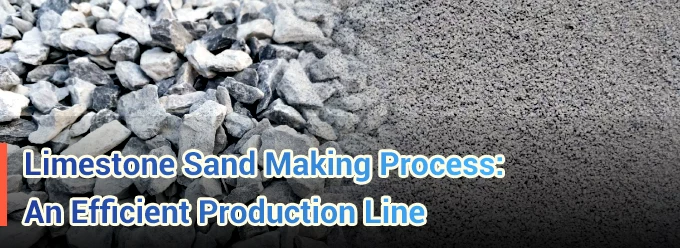
4. Sand making (optional): Producing manufactured sand
For applications requiring manufactured sand or finer aggregates, a VSI crusher can be added as the final stage to produce high-quality fine materials.
Five types of limestone crushers
For most medium an d large-scale limestone crushing plants, a combination of jaw crusher for primary crushing and impact crusher for secondary shaping is one of the most common solutions.
However, choosing the right limestone crusher machine depends on limestone characteristics, production capacity, and final product requirements.
1. Jaw crusher: The workhorse for primary crushing
As the essential first stage in limestone crushing plants, jaw crushers easily handle large run-of-mine (ROM) feed sizes.
For blasted limestone with high silica content or hard inclusions, our jaw crushers feature a deep crushing cavity and heavy-duty frame to ensure aggressive intake and non-stop production.
Key specifications:
- Capacity: 1–1,200 t/h
- Reduction ratio: 4:1–8:1
- Best for: Primary crushing of raw, large-sized limestone
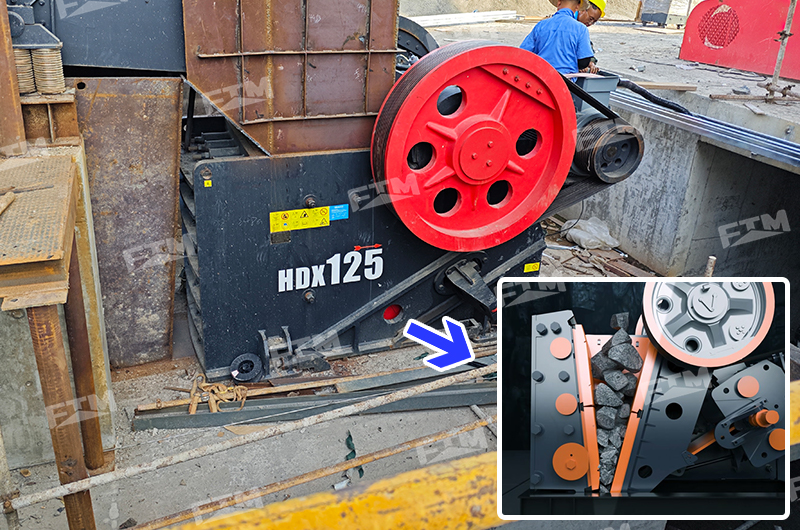
Engineered with high-manganese steel jaws and robust eccentric shafts, FTM Machinery's jaw crushers are built for small, medium and large-scale limestone quarrying.
Plus, the wear-resistant jaw liners deliver an extended service life of 6–12 months under continuous operation, drastically reducing your downtime and maintenance costs.
Popular jaw crusher models: Get the latest quote
| Model | Max. Feed Size | Capacity | Application |
| PE 400×600 | 340 mm | 16–64 t/h | Small and medium-sized quarries |
| PE 750×1060 | 630 mm | 110–320 t/h | Medium-scale crushing plants |
| PE 1500×1800 | 1,200 mm | 500–1,200 t/h | Large limestone quarries |
2. Impact crusher: Ideal for secondary crushing and aggregate shaping
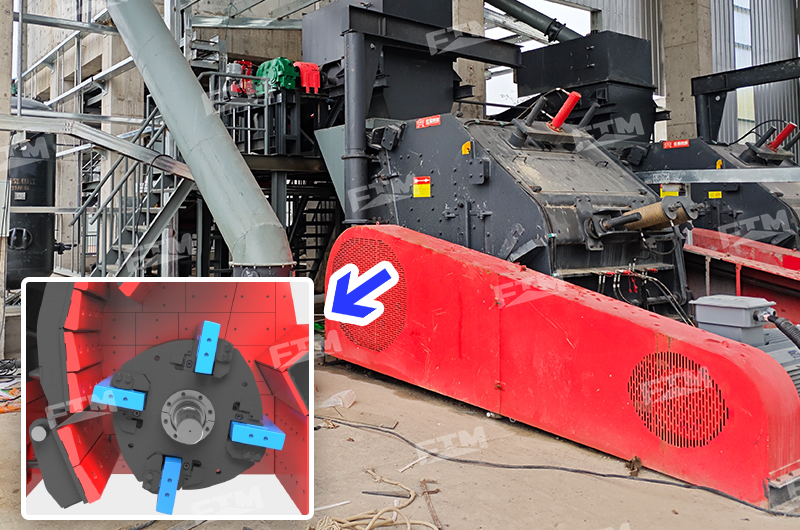
Among different limestone crushers, the impact crusher is widely used in secondary and tertiary limestone crushing. It uses high-speed impact force to produce well-shaped, cubic aggregates with excellent particle shape.
It is especially suitable for producing concrete aggregates, asphalt aggregates and road construction materials.
Key specifications:
- Capacity: 30–2,000 t/h
- Reduction ratio: 10:1–20:1
- Best for: High-quality aggregate production
Popular impact crusher models: Get the latest quote
| Model | Max. Feed Size | Capacity | Application |
| PF-1007 | 300 mm | 30–70 t/h | Small aggregate production |
| PF-1315 | 350 mm | 120–250 t/h | Medium limestone crushing plants |
| PF-1520 | 500 mm | 300–550 t/h | Large-scale aggregate production |
3. Hammer crusher: One-stage crushing solution for limestone
When high reduction in a single pass is required, a hammer crusher is an efficient limestone crusher machine for cement plants and limestone processing.
It can reduce 600–1,000 mm run-of-mine feed directly down to under 25 mm in just one step—which is why it is widely preferred by cement plants globally to streamline their production lines.
Engineered with an optimized, non-clogging crushing cavity, our hammer crushers perform exceptionally well with limestone containing clay or moisture under 8%.
Key specifications:
- Capacity: 60–3,000 t/h
- Reduction ratio: Up to 50:1
- Best for: Cement plants, single-stage reduction and glass sand production
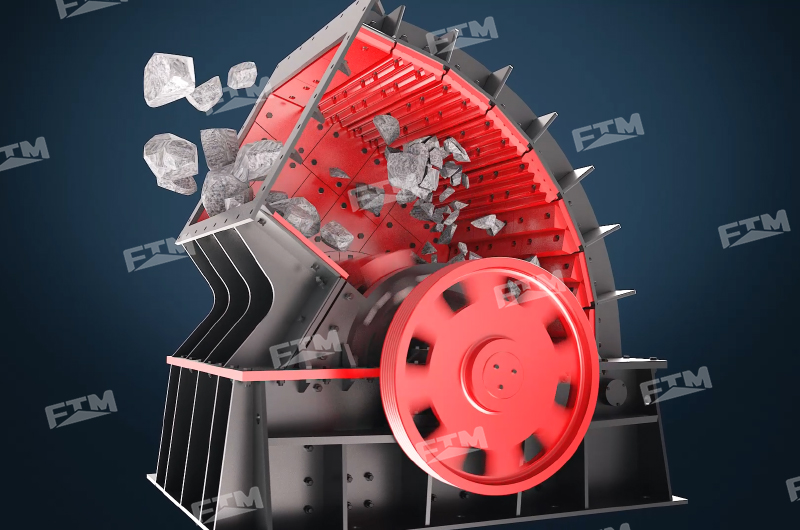
Depending on the abrasiveness of your limestone, we offer customizable hammerheads cast from high-manganese steel, low-alloy steel or high-chromium steel to maximize lifespan and reduce wear costs.
Popular hammer crusher models: Get the latest quote
| Model | Max. Feed Size | Capacity | Application |
| PCZ1308 | 380 mm | 60–160 t/h | Small and medium limestone crushing plants |
| PCZ1615 | 550 mm | 200–550 t/h | Medium-scale plants for gypsum, coal and soft rock crushing |
| PCZ1720 | 650 mm | 500–1,000 t/h | Large-scale limestone crushing and cement production |
4. Roll crusher: Low fines and gentle crushing
A roller crusher is suitable for applications where reducing fines and over-crushing is important.
Its compression-based crushing method produces fewer fine particles compared with impact crushing, making it suitable for sticky or moisture-containing limestone.
Key specifications:
- Capacity: 3–110 t/h
- Reduction ratio: 3:1–5:1
- Best for: Reducing fines, processing sticky or wet limestone
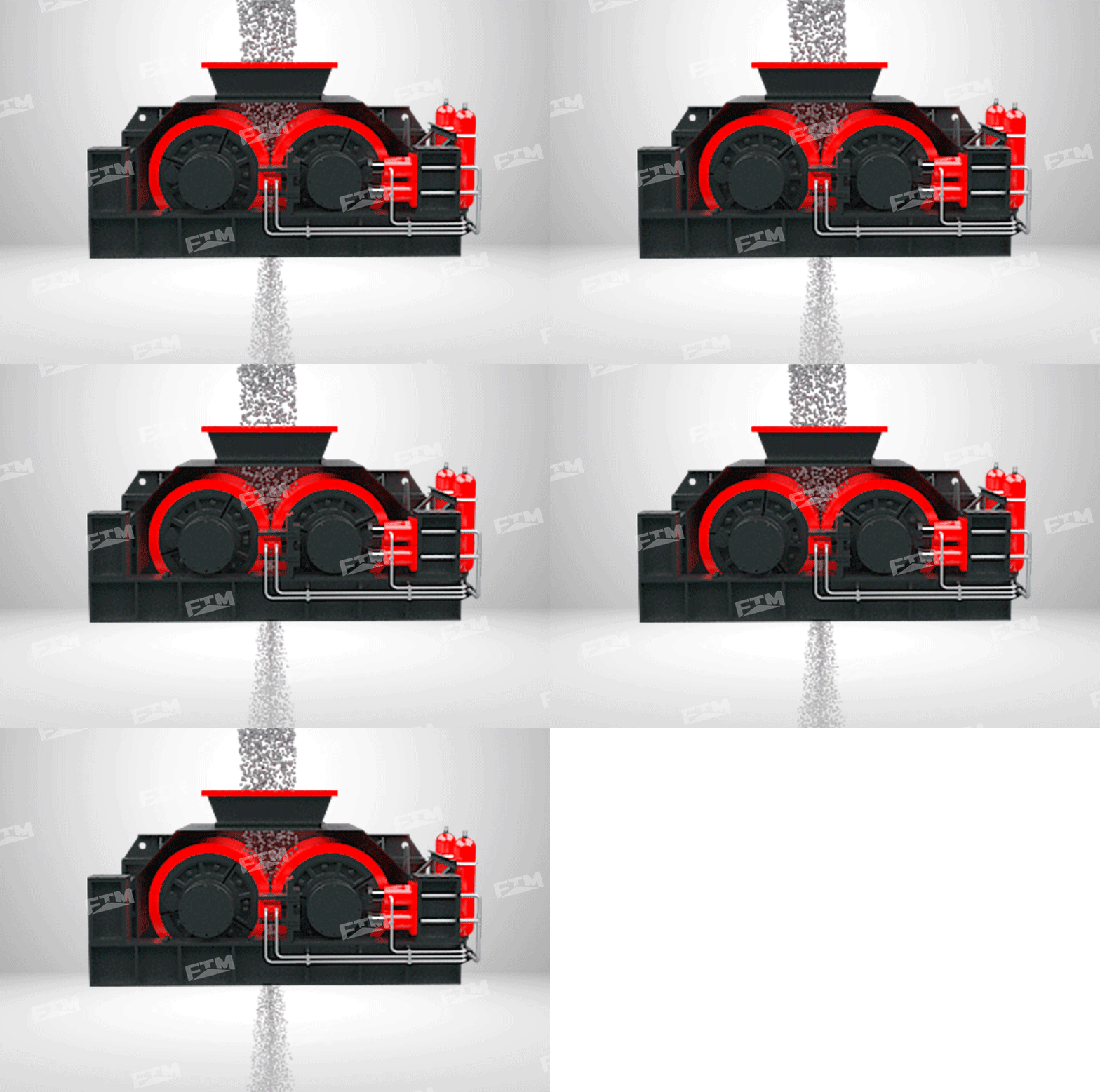
FTM Machinery roller crushers feature spring safety systems and optional toothed rollers for handling sticky materials while reducing blockage risks.
Popular roller crusher models: Get the latest quote
| Model | Max. Feed Size | Capacity | Application |
| 2PG0640 | 25 mm | 5–20 t/h | Small limestone processing |
| 2PG1060 | 30 mm | 20–50 t/h | Medium crushing applications |
| 2PG1560 | 30 mm | 30–110 t/h | Industrial limestone production |
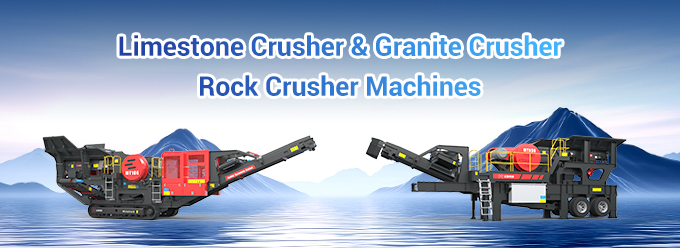
5. Mobile limestone crusher: Flexible solution for remote projects
The mobile limestone crusher integrates crushing and screening equipment onto a single, heavy-duty mobile chassis. This allows operators to process limestone directly at the quarry face, eliminating expensive material hauling costs and slashing setup times from weeks to days. Get the latest quote
Key specifications:
- Capacity: 50–650 t/h
- Main crusher options: Configurable with Jaw, Impact or VSI crushers
- Best for: Contractor projects, frequent site transits and rapid-deployment operations
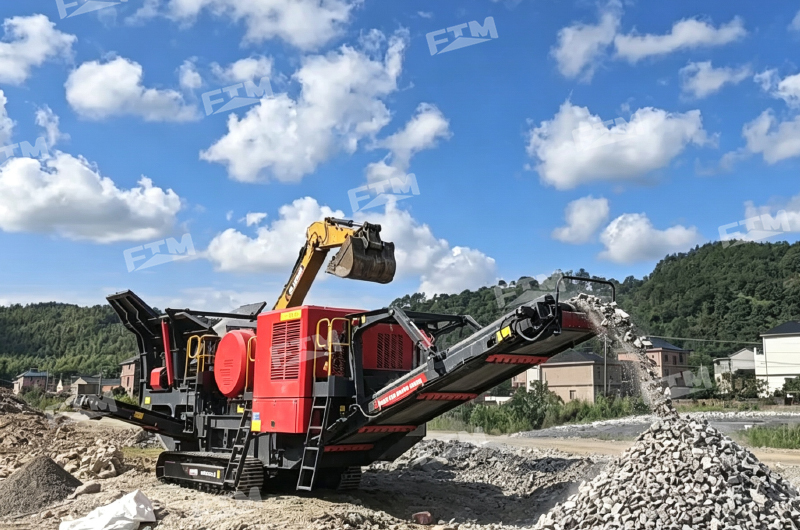
Our mobile plants are available in both wheeled and tracked versions. Whether you are handling a short-term infrastructure contract or operating across multiple rugged mining sites, these units deliver plug-and-play productivity anywhere.
How much does a limestone crushing plant cost?
The cost of a limestone crushing plant typically ranges from $20,000 to $300,000+, depending entirely on your required production capacity, equipment configuration and automation level.
Estimated price guide by capacity:
| Plant capacity | Typical equipment setup | Estimated price range |
| Small Scale (10–50 t/h) | Small Jaw Crusher + Small Impact/Hammer Crushe | $20,000 – $60,000 |
| Medium Scale (50–200 t/h) | Standard Jaw Crusher + Impact Crusher + Vibrating Screen | $70,000 – $150,000 |
| Large Scale (200–600+ t/h) | Heavy-Duty Jaw Crusher + Multiple Impact Crushers + Full Automation | $200,000 – $400,000+ |
| Mobile Plant (50–500 t/h) | Wheeled or Tracked Mobile Crushing Station | $120,000 – $300,000+ |
Key factors that affect your total cost:
- Capacity (t/h): Higher output requires larger machines and heavier heavy-duty frames, which increases the price.
- Stationary vs. Mobile: Mobile plants cost more upfront but save you massive amounts of money on infrastructure and material hauling.
- Rock hardness & silica: If your limestone has high silica content, you need stronger wear parts, which affects the maintenance budget.
Get a customized limestone crushing solution
Whether you're building a new limestone crushing plant or upgrading an existing one, FTM Machinery offers everything from individual limestone crushing equipment to complete EPC turnkey solutions.
Contact our engineers today for a customized plant design, factory-direct quotation and delivery schedule.