Jaw crusher or impact crusher? What key factors should be considered to make the right choice?
An incorrect selection will directly lead to substandard finished products and increased operating costs. Understanding the core differences between the two types of crusher equipment is crucial to matching your stone materials and production goals.
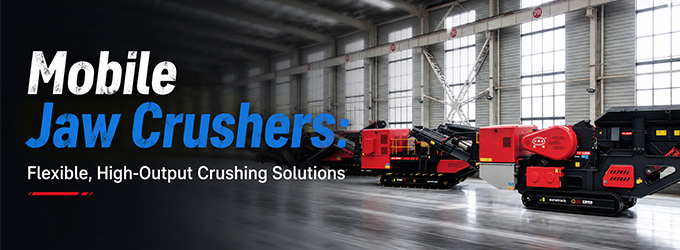
In addition to stationary main units, jaw crushers and impact crushers can also be integrated into mobile crushing plants for flexible on-site operation.
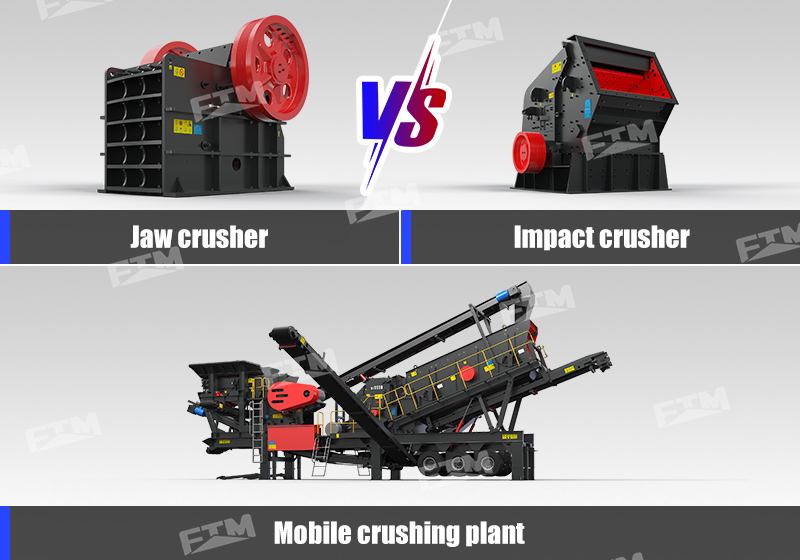
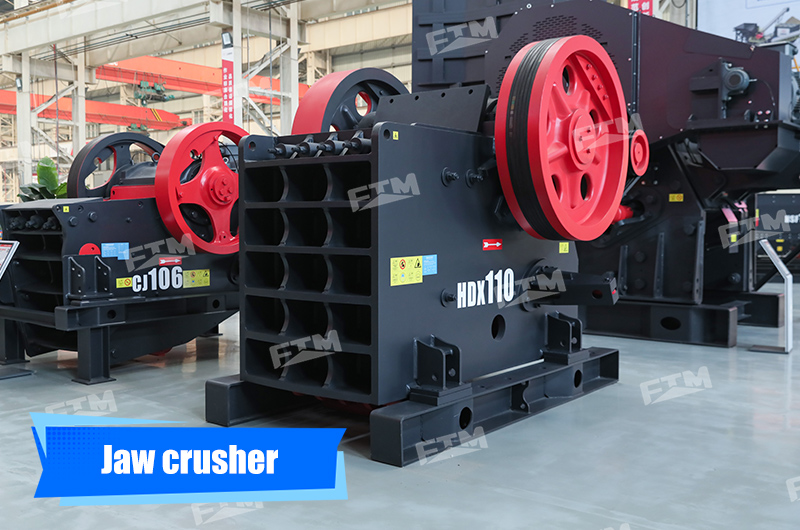
Jaw crusher: the best choice for coarse crushing
The jaw crusher breaks large raw stones into medium-sized aggregates. It is widely used in mining, metal ore crushing, large-scale stone plants, infrastructure projects and primary ore processing. It is mainly suitable for primary processing of large-size feed materials.
If your goal is simply to crush large stones and you do not have strict requirements for the final product, the jaw crusher is the ideal choice.
Impact crusher: classic configuration for medium-fine crushing
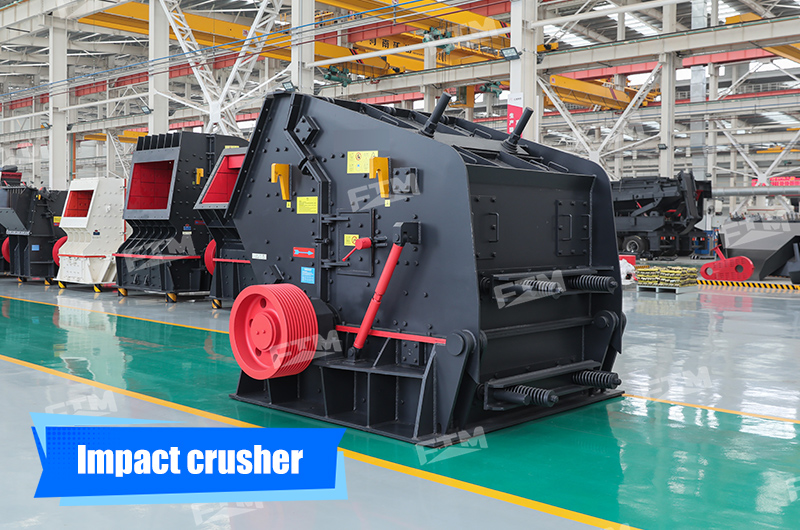
The impact crusher crushes medium-sized stones into small aggregates of uniform size and regular shape. It is widely used in aggregate processing, construction waste recycling, cement materials and road projects, and focuses on producing high-standard aggregates.
If your material is relatively soft and you require fine crushing to achieve uniform particle shapes, the impact crusher is the classic choice.
Jaw crusher VS impact crusher: key differences
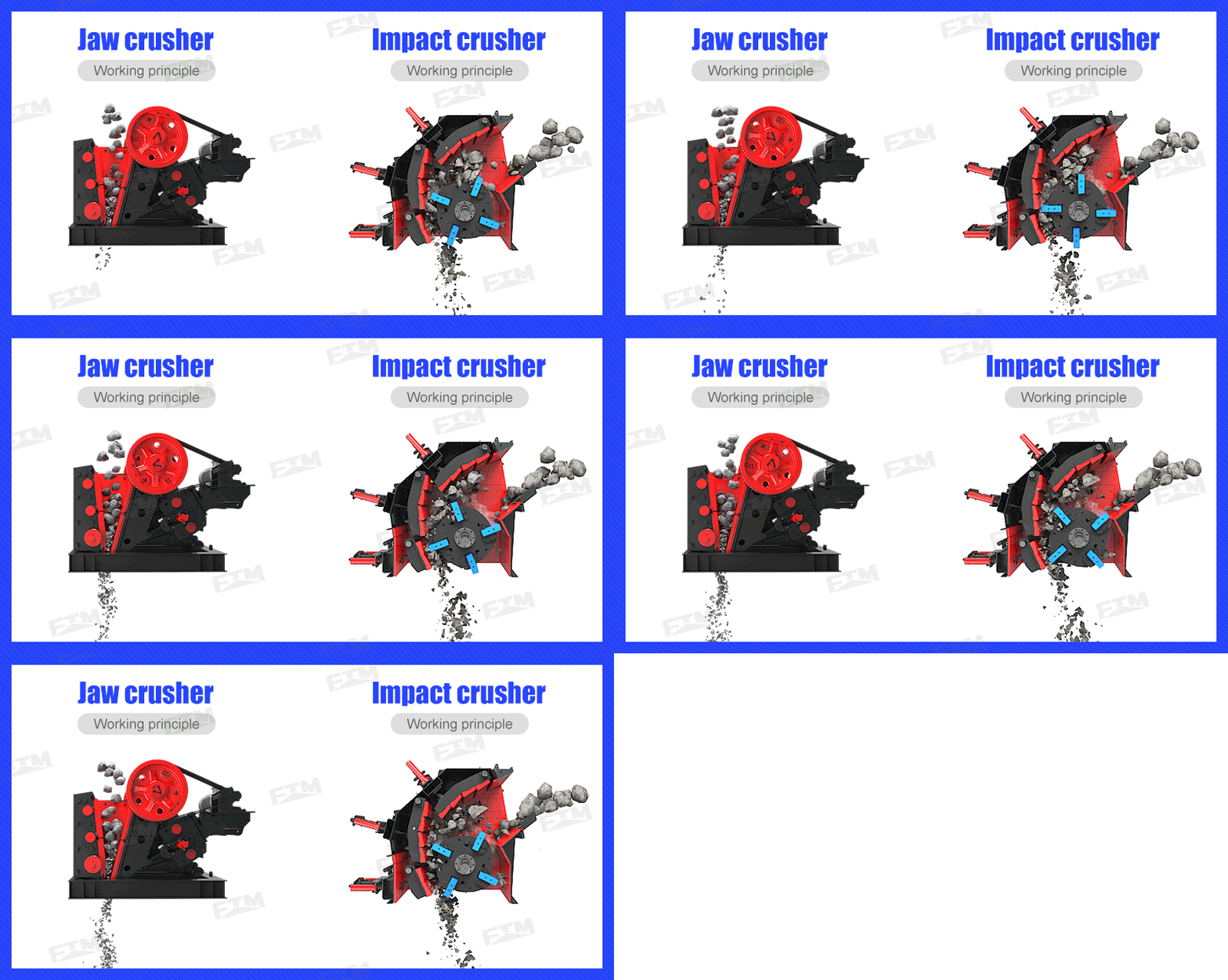
1. Different working principles
- Jaw crusher working principle: it primarily relies on static compression crushing. Materials are compressed when the movable jaw plate approaches the stationary jaw plate, and falls naturally under gravity when the movable jaw moves away.
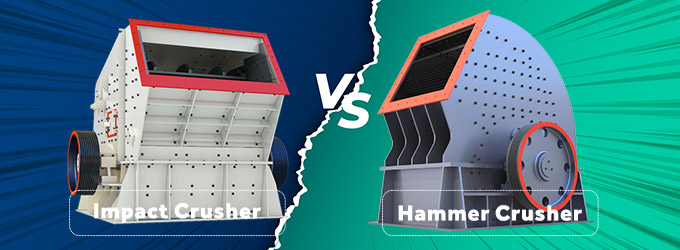
- Impact crusher working principle: it is an impactor crusher in which a high-speed rotor drives blow bars to strike the material. The materials break via impacts against impact plates and particle-on-particle collisions.
2. Differences in feed and output particle
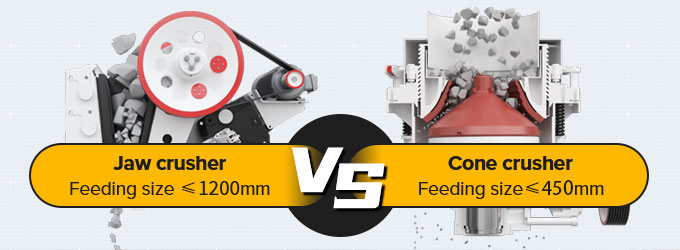
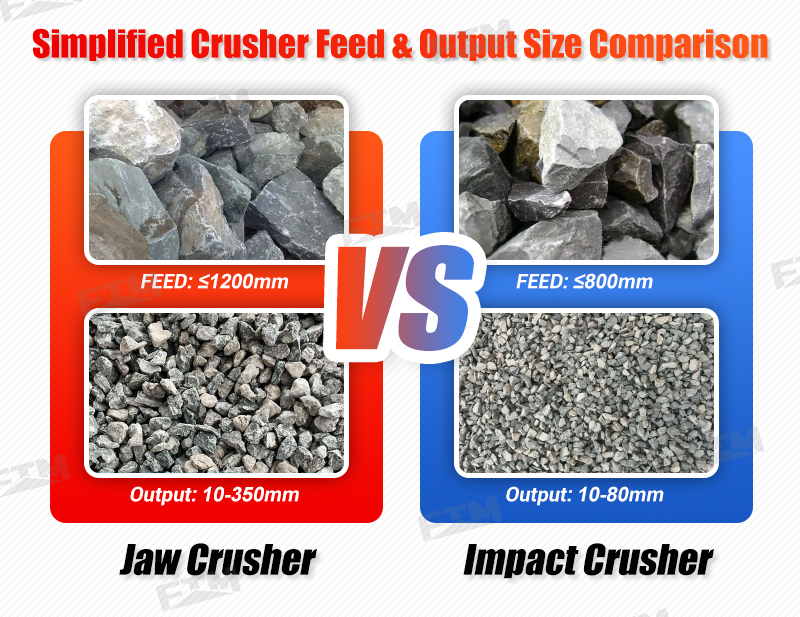
- Jaw crusher: The crusher equipment features a large feed opening and is suitable for extra-large raw materials, with a maximum feed size of 1,200 mm. Its output size ranges from 10–350 mm. However, finished particles are irregular, mostly flaky and needle-shaped stones.
- Impact crusher: The stone crusher has a relatively small feed opening, with a maximum feed size of 800 mm. Its output size ranges from 10–80 mm. Finished aggregates have uniform particle size, mostly cubic and well-shaped stones.
3. Differences in production capacity
- Jaw crusher: This crusher machine fits high-output production lines with a capacity of 1–1,435 t/h. It runs stably and continuously, ideal for large-scale continuous primary crushing.
- Impact crusher: Under the same conditions, its capacity is slightly higher than that of a jaw crusher, ranging from 1–2,000 t/h, making it very suitable for fine aggregate production.
4. Differences in suitability for material hardness
- Jaw crusher: Well suited to hard materials and capable of crushing high-hardness rocks such as granite, basalt, iron ore, and quartz.
- Impact crusher: This crusher is mainly suitable for low-to-medium hardness materials such as limestone, dolomite, coal and construction waste.
5. Different production line configuration stages
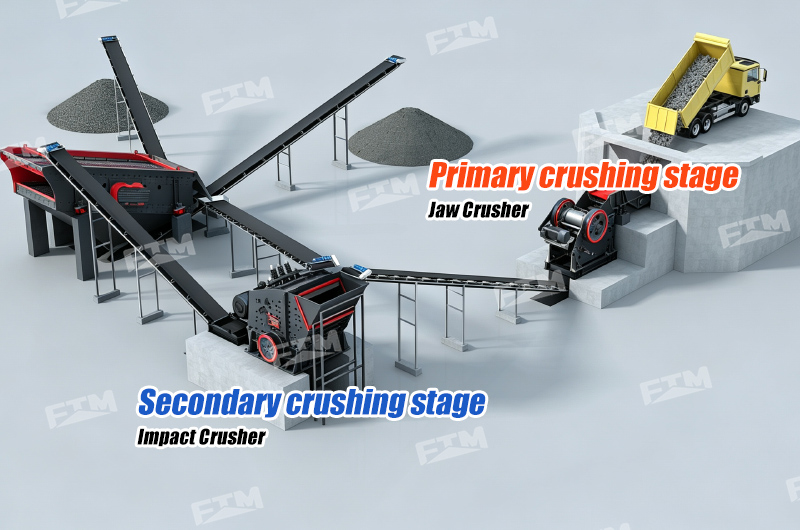
- Jaw crusher: The crusher equipment is fixed as the primary crushing stage in the production line. Most sand and gravel and mining production lines use jaw crushers as the first crushing step, making them a fundamental core piece of equipment.
- Impact crusher: The crusher machine is primarily used for secondary crushing. It is often paired with a jaw crusher to form a production line, responsible for the medium and fine crushing of soft aggregates.
6. Differences in costs
- Jaw crusher: The crusher has a lower purchase cost for the same capacity. Compressive-crushing delivers low wear-part costs for hard rock, with less maintenance and shorter downtime. But finished particle shape is irregular, requiring extra shaping equipment and added investment.
- Impact crusher: It costs more for the same capacity. Wear-part costs are low for medium-hard and soft materials. Hammers wear fast on hard rock, leading to frequent maintenance and longer downtime. It yields cubic-shaped aggregate directly, and no-downstream shaping equipment is needed for some projects.
Due to differences in capacity and applicable materials, a direct comparison of their costs is not possible. Contact us for the most accurate pricing.
7. Differences in operation and maintenance performance
- Jaw crusher: It generates fewer fines. Wear-parts are easy to disassemble for convenient and reliable maintenance with high overall operating stability. It can tolerate foreign hard objects such as iron blocks with strong overload-protection capacity.
- Impact crusher: It produces more fines. Featuring compact structure and small floor space, the machine delivers relatively lower vibration. However, hard foreign objects may damage the rotor and blow bars, so strict iron removal for feed material is required.
Jaw crusher VS impact crusher: quick guide to make the right choice
| Features | Jaw crusher | Impact crusher |
| Working principle | Compression | Impact |
| Feed size | ≤ 1,200 mm | ≤ 800 mm |
| Output size | 10–350 mm, irregular | 10–80 mm, uniform and rounded |
| Capacity | 1–1,435 t/h | 1–2,000 t/h |
| Material hardness | Hard rock | Low to medium hardness |
| Production stages | Primary coarse crushing | Secondary medium-fine crushing |
| Initial purchase cost | Higher | Lower |
| Maintenance | Less time | Relatively frequent |
| Fines | Fewer | More |
| Foreign-object & overload resistance | Strong | Strict iron removal required for feed material |
Opt for jaw crushers:
- The raw material mainly are high-hardness rock.
- The raw material blocks are large and require primary crushing.
- No special requirements for aggregate shape and only basic crushing is needed.
Opt for impact rock crushers:
- The raw material is medium-hard to soft.
- The production of high-quality, cubical finished aggregate is required.
- Secondary fine crushing and shaping are needed.
Optimal configuration:
Most standardized aggregate production lines use a two-stage “jaw crusher + impact crusher” setup instead of a single machine, balancing stable primary crushing and high-quality secondary crushing for most stone processing projects.
Conclusion
Crusher selection requires comprehensive evaluation of actual project needs, not just equipment price or single performance data. Proper configuration reduces excess energy use and wear, improving overall production line efficiency.
Still unsure which machine to choose? Contact our engineers, who are ready to assist you anytime.