
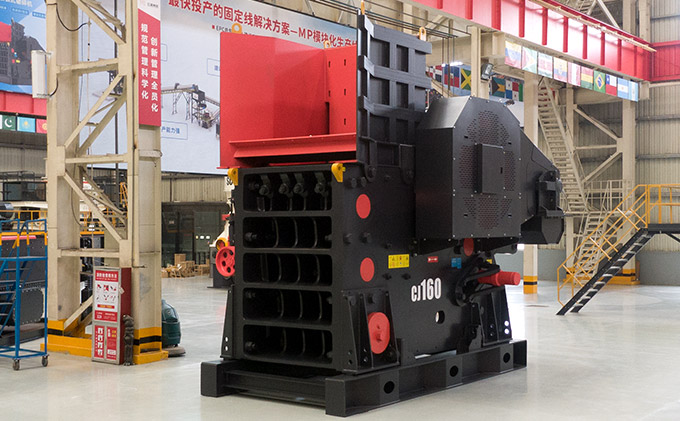
 Download Jaw Crusher
4.61 MB
Download Jaw Crusher
4.61 MB


What is a jaw crusher?
A jaw crusher is a primary crushing machine used to reduce large rocks, ores and construction materials into smaller pieces.
It is widely used in mining, quarrying, aggregate production and recycling because it can handle hard, abrasive and bulky feed material.
As the first machine in a crushing line, its main purpose is to achieve high reduction ratios and prepare materials for further processing.
Jaw crusher video animation
Materials commonly processed by jaw crushers include:
- Hard rocks: Granite, basalt, quartz and sandstone.
- Ores and minerals: Iron ore, gold ore, copper ore, limestone and river gravel.
- Construction waste: Concrete, reinforced concrete, asphalt and brick.
They are especially effective when the feed material is large, hard or irregular in shape.
How does a jaw crusher work?
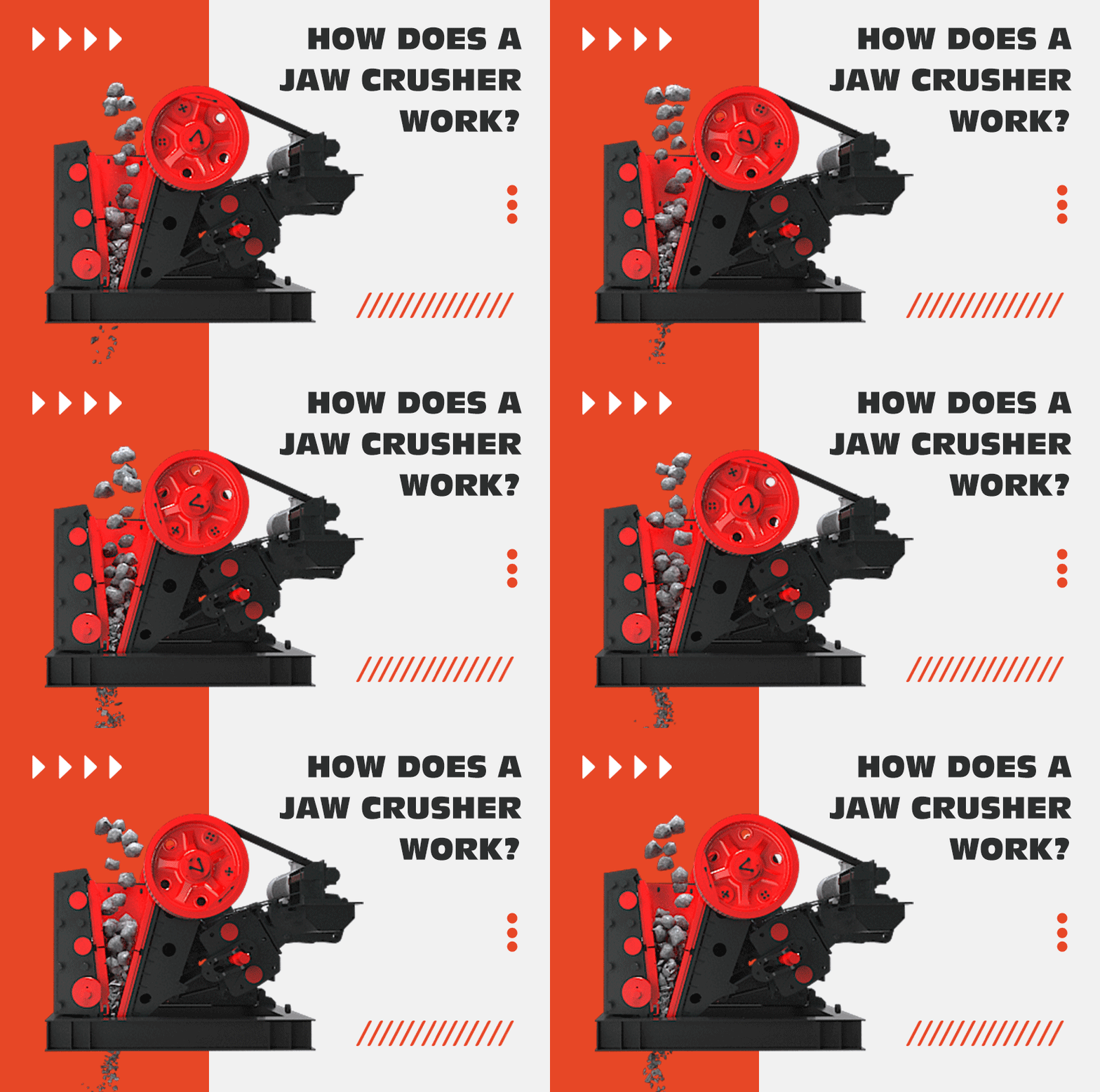
A jaw crusher works by compressing material between two jaw plates:
Raw material enters the crushing chamber from the top, where the movable jaw moves toward the fixed jaw to compress and crush the material into smaller pieces. As the movable jaw moves away, the crushed material drops lower in the chamber.
The process repeats until the material is small enough to exit through the discharge opening. The size of the final product is controlled mainly by the closed side setting (CSS), which is the smallest gap between the two jaw plates.
Popular types of jaw crushers
Since the first jaw crusher was invented by Eli Whitney Blake in 1858, the design has continued to evolve for different crushing applications.
Based on decades of engineering experience, FTM Machinery offers five proven jaw crusher series, each built for a specific production requirement—from small quarries to high-capacity mining operations.
1. PE/PEX series jaw crusher
The PE/PEX jaw crusher features a simple structure, low operating costs and easy maintenance. The PE jaw crusher is used for primary crushing, while the PEX jaw crusher is designed for secondary crushing with finer output.
It is widely used in small and medium-sized aggregate production lines as an economical and reliable crushing solution. Get a Quote
- Maximum feed size: ≤1,200 mm
- Discharge particle size: 10–350 mm
- Capacity: 1–1,200 t/h
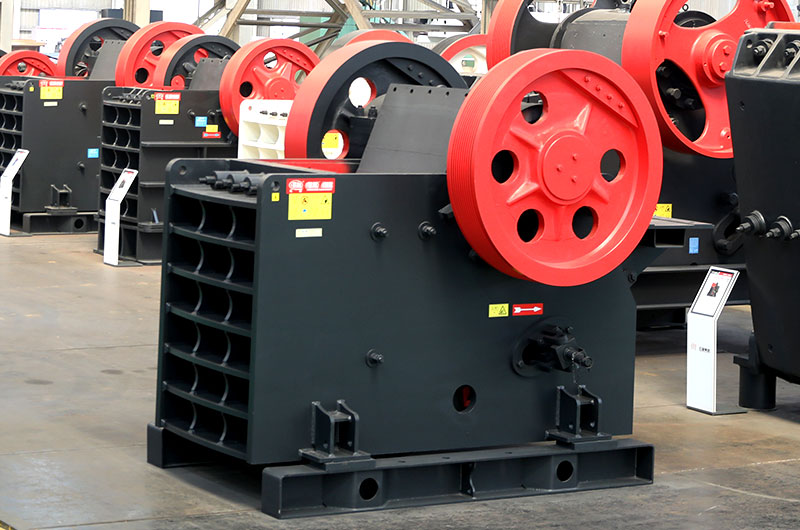
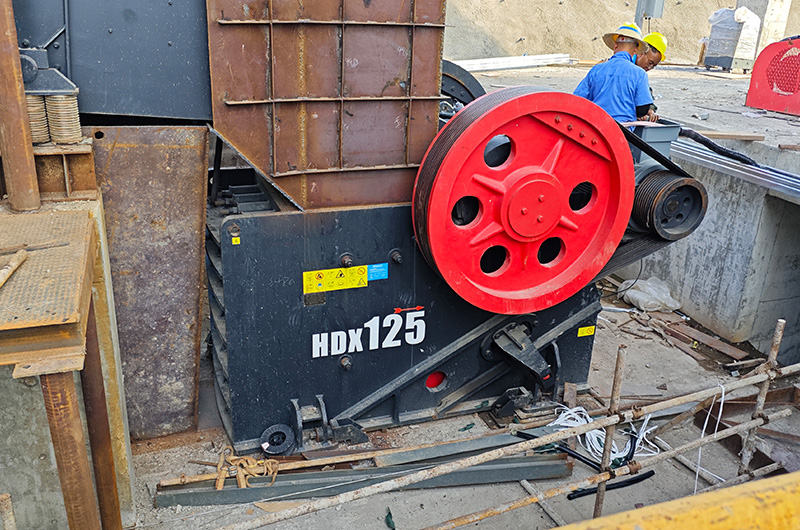
2. HDX series jaw crusher
The HDX jaw crusher is developed with advanced German crushing technology. Its heavy-duty steel frame withstands high crushing forces, making it ideal for hard and abrasive stones.
The optimized crushing chamber and larger toggle angle improve crushing efficiency while reducing wear on key components. Get a Quote
- Maximum feed size: ≤800 mm
- Discharge particle size: 45–225 mm
- Capacity: 50–650 t/h
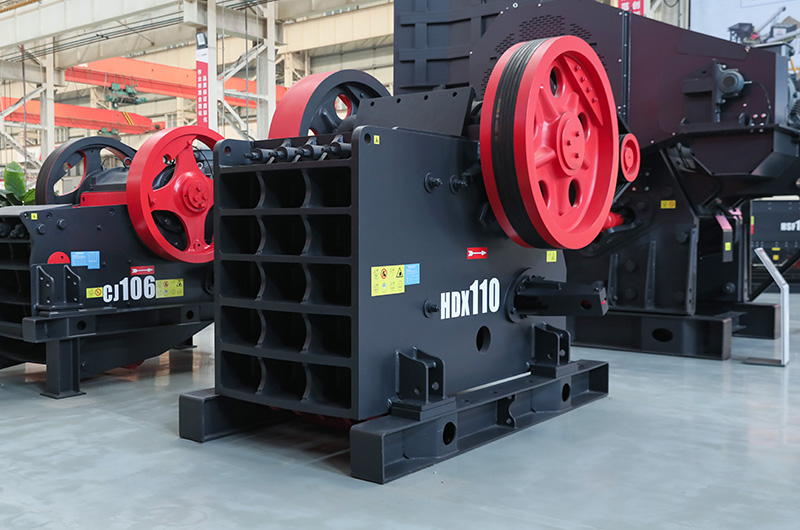
3. CJ series jaw crusher
The CJ jaw crusher is built for higher output with less downtime.
It is a reliable solution for medium to large-scale aggregate production lines and can be integrated into both stationary and mobile crushing plants. Get a Quote
- Maximum feed size: ≤1,040 mm
- Discharge particle size: 60–300 mm
- Capacity: 105–1,280 t/h
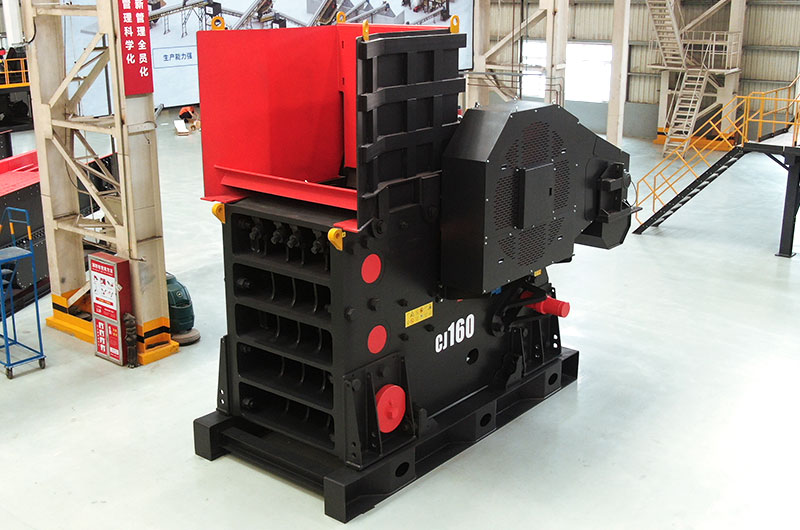
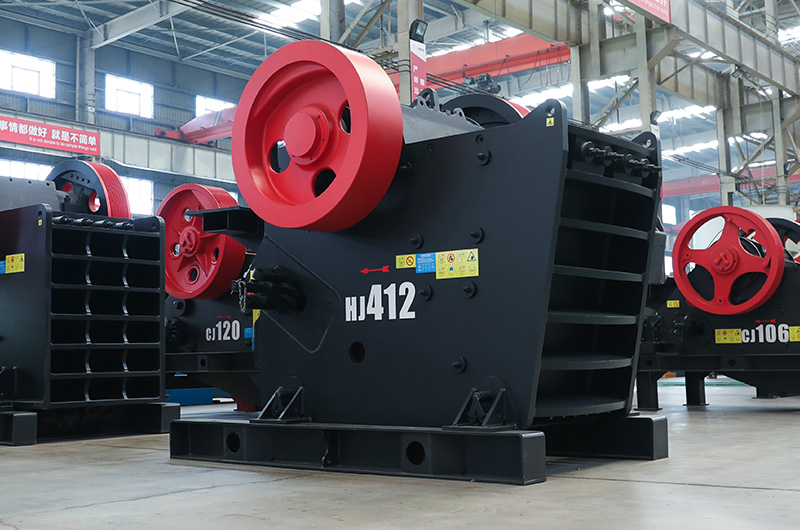
4. HJ series jaw crusher
The HJ jaw crusher is designed for heavy-duty crushing with high durability and stable performance. Its box-frame structure strengthens the crusher, extends service life and helps reduce the cost per ton.
Different jaw plate tooth profiles are available for various materials and applications. Get a Quote
- Maximum feed size: ≤1,040 mm
- Discharge particle size: 40–300 mm
- Capacity: 55–1,160 t/h
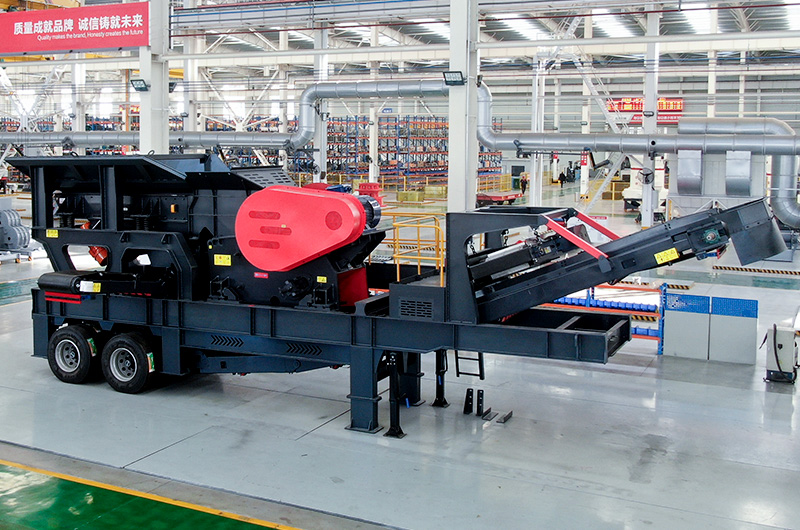
5. Mobile jaw crusher
The mobile jaw crusher integrates a jaw crusher, vibrating feeder, screening equipment and conveyor system into a mobile primary crushing line. It saves material transportation time and reduces production costs. Get a Quote
Not sure which model fits your application? Read our detailed comparison of jaw crusher types to find the best option for your crushing plant.
Why choose FTM Machinery jaw crushers?
FTM Machinery is a professional jaw crusher manufacturer with decades of experience in design and production. Our jaw crushers deliver high capacity, reliable performance and lower operating costs.
- High crushing capacity: Handles feed sizes up to 1,200 mm and materials with compressive strength up to 320 MPa. The deep V-shaped crushing chamber improves material flow and crushing efficiency.
- Easy adjustment, less blockage: The wedge-type discharge adjustment allows quick output size changes and helps prevent material blockage.
- Versatile jaw plate options: Different jaw plate materials, including high manganese steel, alloy steel and composite materials, are available to match various materials and improve wear resistance.
- Strong structure: Heavy-duty steel frames and high-quality components provide strong crushing force, stable operation and longer service life.
- Easy maintenance: An automatic lubrication system reduces manual maintenance, helping reduce long-term operating costs.
- Lower energy costs: Compared to competitors, our energy-saving design reduces energy consumption by 15%–30% without losing production efficiency.
FTM Machinery jaw crushers for sale:Get a Quote
Main parts of the jaw crusher
A jaw crusher consists of several main parts that work together to provide crushing functionality.
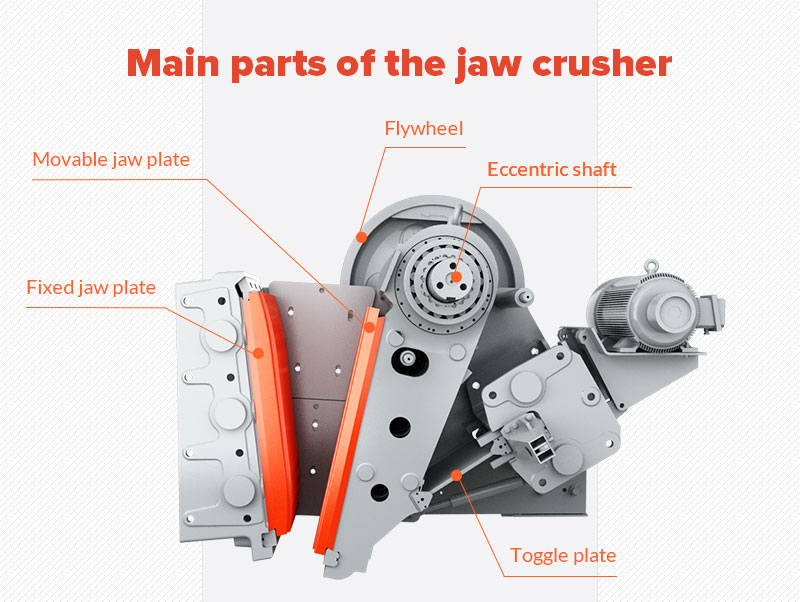
The basic structure of a jaw crusher includes the fixed jaw plate, movable jaw plate, toggle plate, eccentric shaft, flywheel, etc.
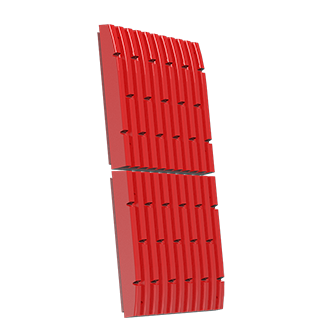
1. Fixed jaw plate
The fixed jaw plate is a stationary, rigid plate that forms the upper surface of the crushing chamber. It remains fixed in its position and does not move during the crushing process. It is made of high manganese steel or other wear-resistant materials.
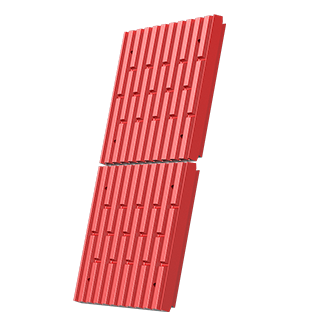
2. Movable jaw plate
The movable jaw plate, also called the swing jaw, is the reciprocating part of the jaw crusher. It moves back and forth against the fixed jaw plate, exerting pressure on the materials and crushing them. The movable jaw generally adopts a casting structure.
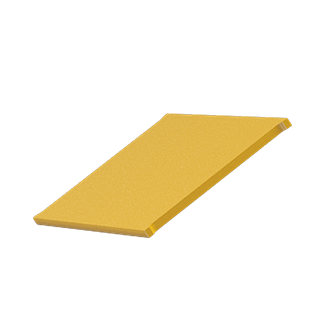
3. Toggle plate
The toggle plate is also known as the thrust plate. It allows the jaw to move up and down, controlling the movement of the jaw to regulate the size of the crushed material. Toggle plates are commonly made of cast iron or high manganese steel.
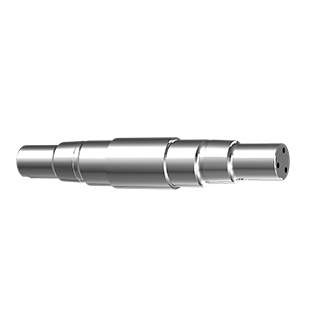
4. Eccentric shaft
The eccentric shaft is the main shaft of the crusher, which bears a huge bending force. It can transmit the rotational motion of the motor to the movable jaw. The eccentric shaft is made of high-carbon steel for durability and resistance to bending.
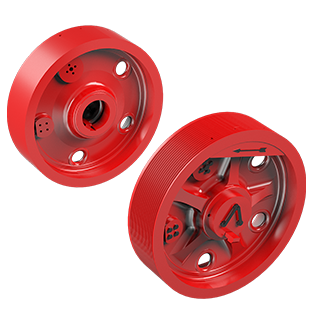
5. Flywheel
The flywheel forms inertial force through rotation and stores energy, which transmits power during the crushing process to ensure the smooth and continuous operation of the machine. Flywheels are typically made of cast iron or cast steel.
Jaw plates, including one fixed plate and one movable plate, are the main wear parts of a jaw crusher. Regular inspection and timely replacement help maintain crushing efficiency and extend service life. Learn How to Choose the Right Jaw Plate.
Other part names and functions of the jaw crusher:
- Frame: Keep the machine in place and protect it to reduce abrasion.
- Bearing: Support the rotating components of the jaw crusher, such as the eccentric shaft and flywheel.
- Tension rod: Control the movement of the movable jaw and prevent it impact the front main frame in any situation.
- Adjusting set: Change the discharging opening size of the crusher to satisfy different customers' requirements.
Customer case—Jaw crusher for sale in Kazakhstan
A customer in Kazakhstan uses FTM Machinery jaw crushers for granite aggregate production. The crusher is selected as the primary machine for processing hard granite, handling 150 t/h with a feed size of ≤500 mm and producing 0–150 mm output.
"The jaw crusher is incredibly stable and powerful. It easily maintains our 150 t/h capacity with very low wear on the jaw plates. It is the perfect primary machine for our aggregate production." — Plant Manager, Kazakhstan
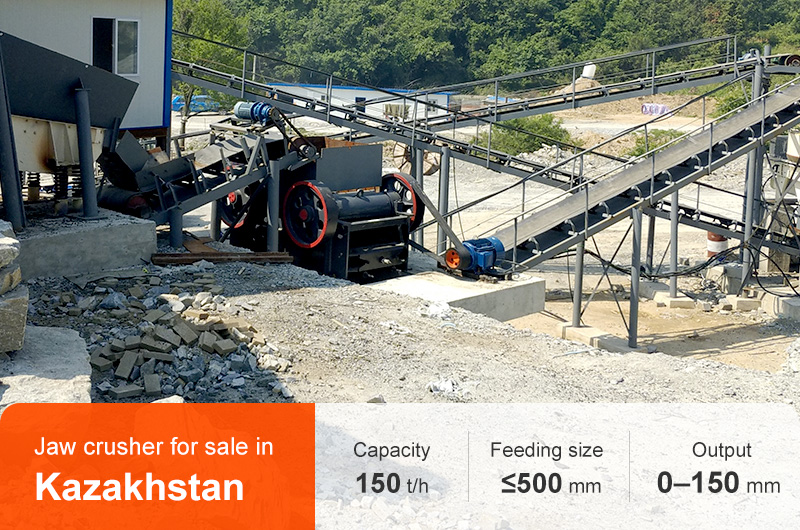
FTM Machinery jaw crushers are trusted by customers worldwide and have been exported to many countries, including the United States, Russia, Chile, Uzbekistan and other markets across Asia, Africa and the Americas. Their reliable performance and stable quality have received positive feedback from global customers.
Frequently asked questions about jaw crushers
1. What model jaw crusher do I need?
- Determining the model of the jaw crusher depends on various factors:
- a. Feed size: The material size should not exceed the maximum feed size of the crusher model.
- b. Desired product size: Different models have different maximum output sizes. Ensure it can produce the final size.
- c. Capacity demand: Consider the required production capacity, such as tons per hour needing to be crushed.
- d. Material hardness: Harder materials require higher crushing forces and more robust crushers.
2. How to adjust the discharge size of the crusher?
- The discharge size of a jaw crusher can be adjusted by changing the size of the opening between the jaws. This can be done using a hydraulic system or adjusting shims or adjusting wedge block.
3. Can a jaw crusher be customized to specific needs?
- Yes, we can offer customization options to tailor the jaw crusher to your specific requirements. This includes modifications to the jaw plates, motor power, and additional features based on your application requirements.
4. How do I maintain my jaw crusher?
- Regular maintenance of your jaw crusher is essential to ensure optimum performance and long service life. This includes checking worn parts, maintaining jaw plates, ensuring lubrication, tightening bolts, and cleaning on time. Refer to the user manual for detailed maintenance.
Parameter
- PE/PEX Jaw Crusher
- HD Series Jaw Crusher
- CJ Series Jaw Crusher
- HJ Series Jaw Crusher
| Model | Feed opening size(mm) | Max.Feeding size (mm) | Adjustment range of discharge port (mm) | Capacity(t/h) | Rotation speed of eccentric shaft(r/min) | Power (kw) | Dimensions(L×W×H) (mm) |
| PE 150×250 | 150×250 | 125 | 10-40 | 1-3 | 268 | 4P 5.5 | 760×700×860 |
| PE 200×300 | 200×300 | 180 | 15-50 | 2-6 | 260 | 4P 7.5 | 915×780×990 |
| PE 200×350 | 200×350 | 180 | 18-60 | 3-10 | 276 | 4P 11 | 1000×914×1112 |
| PE 250×400 | 250×400 | 210 | 20-70 | 5-21 | 300 | 6P 15 | 1100×1032×1285 |
| PE 400×600 | 400×600 | 340 | 40-100 | 16-64 | 270 | 6P 30 | 1623×1736×1615 |
| PE 500×750 | 500×750 | 425 | 50-100 | 40-110 | 268 | 6P 55 | 1920×1850×1920 |
| PE 600×750 | 600×750 | 500 | 150-200 | 80-240 | 268 | 6P 55 | 2020×1850×1920 |
| PE 600×900 | 600×900 | 500 | 65-160 | 50-160 | 254 | 6P 55 | 2530×1900×2340 |
| PE 750×1060 | 750×1060 | 630 | 80-180 | 110-320 | 245 | 8P 110 | 2680×2380×2785 |
| PE 900×1200 | 900×1200 | 750 | 100-200 | 220-380 | 208 | 8P 110 | 3470×2876×3330 |
| PE1200×1500 | 1200×1500 | 1020 | 150-350 | 400-1000 | 180 | 8P 160-245 | 4850×3220×3680 |
| PE1500×1800 | 1500×1800 | 1200 | 220-350 | 500-1200 | 180 | 8P 280-380 | 5160×3660×4248 |
| PEX 150×750 | 150×750 | 120 | 18-48 | 8-25 | 320 | 4P 15 | 1170×1575×1030 |
| PEX 250×750 | 250×750 | 210 | 25-60 | 13-35 | 320 | 6P 22 | 1550×1730×1470 |
| PEX 250×1000 | 250×1000 | 210 | 25-60 | 16-52 | 330 | 6P 30 | 1580×2006×1390 |
| PEX 250×1200 | 250×1200 | 210 | 25-60 | 20-61 | 330 | 6P 37 | 1780×2214×1430 |
| PEX 300×1300 | 300×1300 | 250 | 20-90 | 16-105 | 300 | 6P 55 | 2210×2320×1723 |
Note: Processing Capacity May Vary with Different Materials and Feeding Sizes.
| Model | Max.Feeding size (mm) | Capacity (t/h) |
| PE 150×250 | 125 | 1-3 |
| PE 200×300 | 180 | 2-6 |
| PE 200×350 | 180 | 3-10 |
| PE 250×400 | 210 | 5-21 |
| PE 400×600 | 340 | 16-64 |
| PE 500×750 | 425 | 40-110 |
| PE 600×750 | 500 | 80-240 |
| PE 600×900 | 500 | 50-160 |
| PE 750×1060 | 630 | 110-320 |
| PE 900×1200 | 750 | 220-380 |
| PE 1200×1500 | 1020 | 400-1000 |
| PE 1500×1800 | 1200 | 500-1200 |
| PEX 150×750 | 120 | 8-25 |
| PEX 250×750 | 210 | 13-35 |
| PEX 250×1000 | 210 | 16-52 |
| PEX 250×1200 | 210 | 20-61 |
| PEX 300×1300 | 250 | 16-105 |
Note: Processing Capacity May Vary with Different Materials and Feeding Sizes.
| Model | Feeding opening size(mm) | Max.Feeding size (mm) | Adjustment range of discharge port(mm) | Capacity(t/h) | Power(kw) | Dimensions L×W×H (mm) |
| HD72(57) | 460×720 | 425 | 45-100 | 50-120 | 6P 55 | 2100×1556×1640 |
| HD86(69) | 580×860 | 500 | 50-150 | 60-280 | 8P 75 | 2200×1754×1810 |
| HD98(751) | 680×980 | 630 | 75-175 | 110-410 | 8P 110 | 2660×1960×2175 |
| HD110(912) | 850×1100 | 750 | 100-200 | 230-550 | 6P 132 | 2960×2381×2556 |
| HD125 | 950×1250 | 900 | 125-225 | 280-750 | 8P 160 | 3500×2614×2925 |
Note:processing Capacity May Vary With Different Materials And Feeding Sizes.
| Model | Feeding opening size(mm) | Max.Feeding size(mm) | Capacity (t/h) |
| HD72(57) | 460×720 | 425 | 50-120 |
| HD86(69) | 580×860 | 500 | 60-280 |
| HD98(751) | 680×980 | 630 | 110-410 |
| HD110(912) | 850×1100 | 750 | 230-550 |
| HD125 | 950×1250 | 900 | 280-750 |
Note:processing Capacity May Vary With Different Materials And Feeding Sizes.
| Model | Maximum Feeding size(mm) | Feeding opening size L×W(mm) | Adjustment range of discharge port(mm) | Capacity(t/h) | Power(KW) | Dimensions L×W×H(mm) |
| CJ96 | 480 | 930×580 | 60-175 | 105-390 | 4P 90 | 2850×2270×1950 |
| CJ106 | 560 | 1060×700 | 70-200 | 150-500 | 4P 110 | 3280×2580×2400 |
| CJ120 | 700 | 1200×870 | 70-200 | 175-610 | 4P 160 | 3700×2790×2950 |
| CJ125 | 760 | 1250×950 | 100-250 | 270-831 | 4P 160 | 4230×2780×2960 |
| CJ150 | 960 | 1400×1200 | 125-250 | 340-880 | 4P 200 | 5030×3440×3970 |
| CJ160 | 960 | 1600×1200 | 150-300 | 430-1145 | 4P 250 | 5780×3460×3580 |
| CJ200 | 1200 | 2000×1500 | 175-300 | 630-1590 | 6P 400 | 6600×3000×4400 |
| CJ1511 | 850 | 1500×1070 | 125-300 | 380-1080 | 6P 200 | 4130×3000×3330 |
| CJ1513 | 1040 | 1500×1300 | 150-300 | 480-1160 | 6P 200 | 4620×2890×4190 |
Note:processing Capacity May Vary With Different Materials And Feeding Sizes.
| Model | Maximum Feeding size(mm) | Capacity(t/h) |
| CJ96 | 480 | 105-390 |
| CJ106 | 560 | 150-500 |
| CJ120 | 700 | 175-610 |
| CJ125 | 760 | 270-831 |
| CJ150 | 960 | 340-880 |
| CJ160 | 960 | 430-1145 |
| CJ200 | 1200 | 630-1590 |
| CJ1511 | 850 | 380-1080 |
| CJ1513 | 1040 | 480-1160 |
Note:processing Capacity May Vary With Different Materials And Feeding Sizes.
| Model | Feed opening (mm) | Maximum feeding size (mm) | Adjustment range of discharge port (mm) | Processing capacity(t/h) | Power (kw) | Dimensions (L×W×H) (mm) |
| HJ308 | 800×510 | 410 | 40-175 | 55-335 | 4P75 | 2650×2162×1810 |
| HJ309 | 930×580 | 480 | 60-175 | 105-390 | 4P90 | 2830×2190×1940 |
| HJ310 | 1060×700 | 560 | 75-200 | 140-500 | 4P110 | 3280×2510×2400 |
| HJ411 | 1045×840 | 700 | 75-225 | 150-565 | 6P 110 | 3640×2340×2660 |
| HJ412 | 1200×830 | 700 | 75-275 | 165-790 | 6P 132 | 3682×2490×2765 |
| HJ612 | 1200×1100 | 880 | 125-275 | 330-805 | 6P 160 | 4510×2390×3640 |
| HJ613 | 1300×1130 | 900 | 125-300 | 330-960 | 6P 160 | 4700×2750×3990 |
| HJ615 | 1500×1070 | 860 | 125-300 | 495-1085 | 6P200 | 5370×3540×3582 |
| HJ815 | 1500×1300 | 1040 | 150-300 | 480-1160 | 6P200 | 5720×3540×4430 |
Note: Processing capacity may vary with different materials and feeding sizes.
| Model | Feed opening (mm) | Maximum feeding size (mm) | Processing capacity(t/h) |
| HJ308 | 800×510 | 410 | 55-335 |
| HJ309 | 930×580 | 480 | 105-390 |
| HJ310 | 1060×700 | 560 | 140-500 |
| HJ411 | 1045×840 | 700 | 150-565 |
| HJ412 | 1200×830 | 700 | 165-790 |
| HJ612 | 1200×1100 | 880 | 330-805 |
| HJ613 | 1300×1130 | 900 | 330-960 |
| HJ615 | 1500×1070 | 860 | 495-1085 |
| HJ815 | 1500×1300 | 1040 | 480-1160 |
Note: Processing capacity may vary with different materials and feeding sizes.