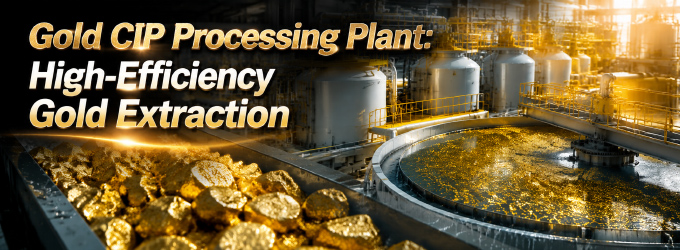
If you are looking for a gold extraction method with high recovery rate, lower investment cost and simpler operation, the gold CIL (carbon-in-leach) process is one of the most widely used cyanidation technologies worldwide.
What is gold CIL process?
Gold CIL processing is currently the mainstream high-efficiency process for gold extraction. It performs cyanide leaching and activated carbon adsorption simultaneously in the same slurry tank.
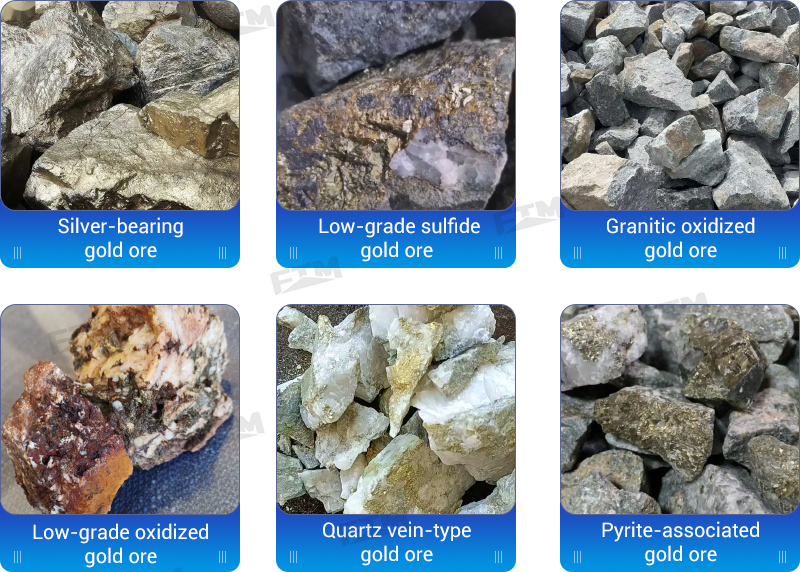
Boasting the core advantage of simultaneous leaching and adsorption, the gold CIL process is typically used for:
- Granitic oxidized gold ore
- Low-grade oxidized gold ore
- Quartz vein gold ore
- Silver-bearing gold ore
- Low-grade sulfide gold ore
- Pyrite-associated gold ore
This process reduces gold losses, achieves a gold recovery rate of over 90%, simplifies the operation process, and is more effective for gold extraction from fine-grained ores.
The overall steps of the gold CIL process
The most significant feature of the gold CIL process is that it combines leaching and adsorption into one process, allowing the gold to be locked in by activated carbon as soon as it dissolves, thereby greatly improving the gold recovery rate. The main process flow is as follows:
Ore pretreatment→Simultaneous leaching and adsorption→Screening and separation→Purification and regeneration→Finished product refining
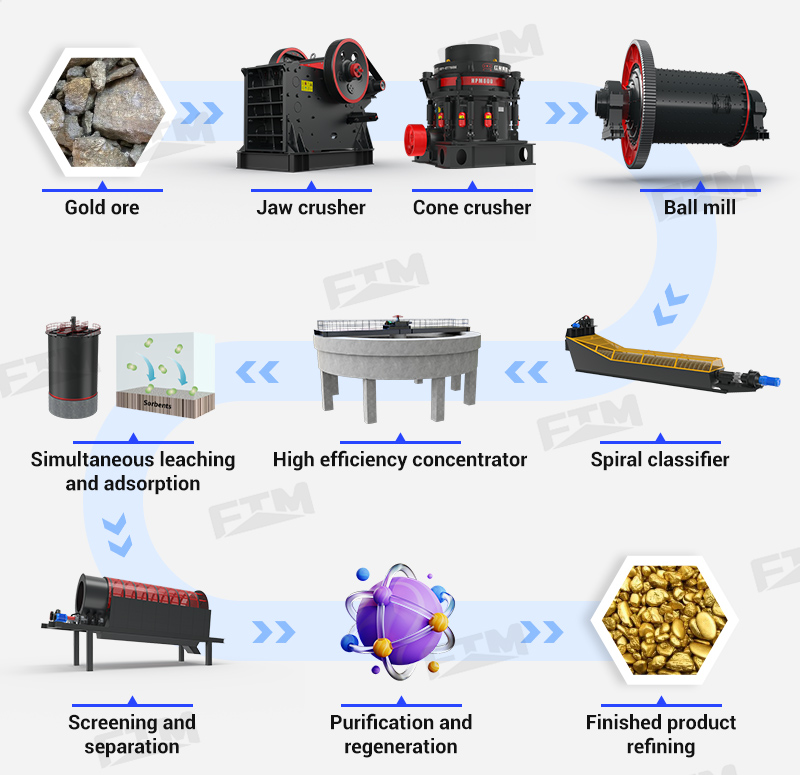
CIL process flowchart
Step 1: Ore pretreatment
Ore pretreatment serves as the foundation for CIL gold extraction, mainly including three core steps: crushing, grinding, grading and slurry conditioning.
1. Crushing
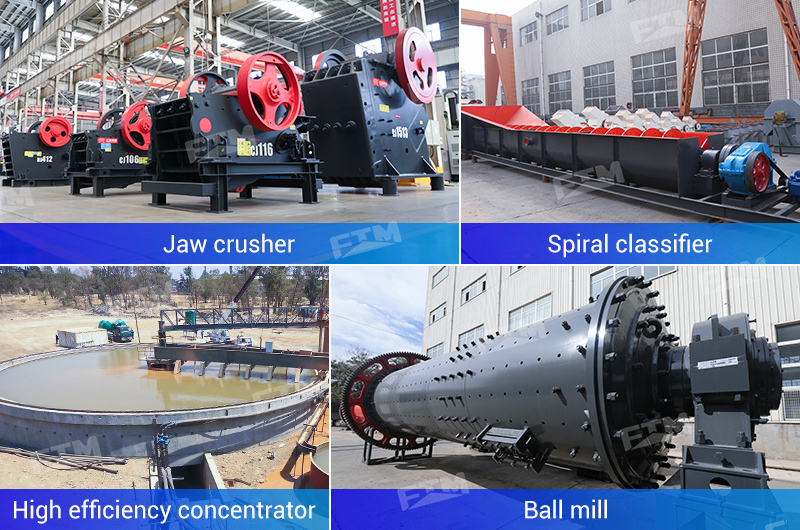
Jaw crushers and cone crushers are the optimal crushing combination for gold CIL equipment. By performing two-stage crushing on the gold ore, the gold is fully exposed, facilitating efficient gold release in subsequent grinding processes.
2. Grinding
In the selection of equipment for the CIL plant, the ball mill plays a core role in ore liberation. This equipment precisely controls the grinding fineness to ensure complete liberation of gold minerals in the ore, freeing them from gangue minerals.
3. Grading and slurry conditioning
The ground slurry is classified by the spiral classifier, with fine particles sent to the high efficiency concentrator and coarse particles returned to the ball mill for regrinding. Then, the slurry is adjusted in the conditioning tank to achieve a concentration of 40%–50%, and lime is added to adjust the pH value to 10–11.5.
Step 2: Simultaneous leaching and adsorption
Simultaneous leaching and adsorption is the core process of gold CIL and a key step differentiating it from the gold CIP(carbon-in-pulp)process, which improves gold recovery rate.
Qualified slurry enters serial adsorption tanks: cyanide solution with a concentration of 0.02%–0.05% is added to the first tank, while activated carbon is loaded into the last tank. Slurry and cyanide travel downstream, and carbon moves counter-currently.
In an alkaline environment, cyanide reacts with elemental gold, resulting in gold leaching. The activated carbon immediately adsorbs the leached gold, rapidly forming gold-loaded carbon.
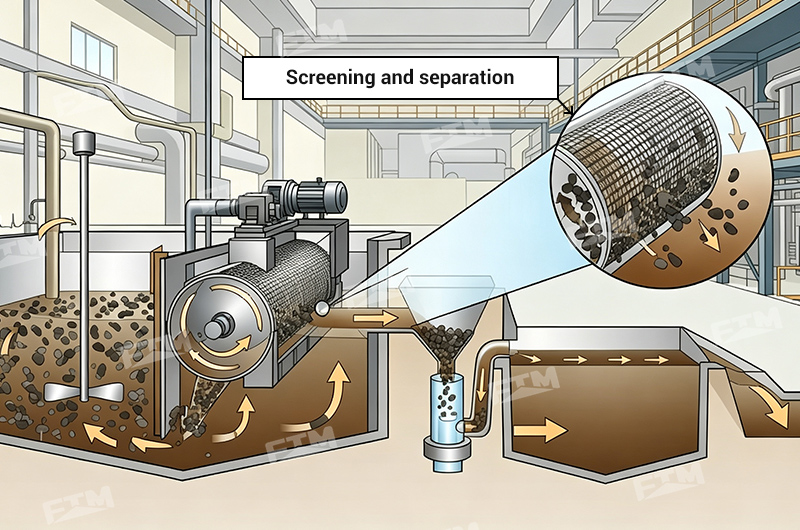
Step 3: Screening and separation
The interstage screens in the gold CIL equipment uses particle size differences to separate gold-bearing carbon from the tailings slurry between the adsorption tank, thereby improving carbon recovery efficiency and ensuring smooth tailings discharge.
Step 4: Purification and regeneration
Gold-loaded activated carbon enters an electrowinning equipment for gold recovery, producing coarse gold sludge during the electrowinning process. The desorbed activated carbon is then regenerated and recycled in the CIL process, thereby reducing carbon consumption and improving production efficiency.
Step 5: Finished product refining
The gold mud produced by electrolysis is washed with water, acid-washed, and smelted at high temperature to remove slag and reagent residues. Finally, it is cooled and shaped by gold ingot casting equipment to be processed into high-purity finished gold.
The entire CIL plant equipment operates in synergy, ensuring the stable operation of the gold extraction process and providing reliable support for the long-term operation of the gold processing plant.
Customize your gold CIL plant and receive a detailed quote
Main equipment used in gold CIL process
The efficient operation of the gold CIL process relies on the coordinated operation of specialized equipment at each stage. Scientific configuration of CIL plant equipment is an important foundation for building a stable and efficient gold extraction plant.
| Gold CIL process stage | Related equipment |
| Crushing | Jaw crusher, cone crusher, vibrating screen |
| Grinding | Ball mill |
| Grading and slurry conditioning | Spiral classifier, high efficiency concentrator, conditioning tank |
| Simultaneous leaching and adsorption | Adsorption tank |
| Screening and separation | Interstage screen |
| Purification and regeneration | Electrowinning equipment |
| Finished product refining | Gold mud washing equipment, acid washing equipment, gold ingot casting equipment |
For more information about CIL equipment configuration, please feel free to contact us.
CIL vs CIP gold processing
Gold CIL process and gold CIP process are the two mainstream cyanidation gold extraction technologies for gold mines. They have core differences in activated carbon handling procedures, which further result in disparities in other links.
| Features | CIL (Carbon-in-Leach) | CIP (Carbon-in-Pulp) |
| Leaching and adsorption | Completed in a single integrated step | Conducted in two separate sequential steps |
| Adsorption time | Simultaneous with gold leaching | After the full completion of gold leaching |
| Production cycle | Short duration | Long duration |
| Investment cost | Low cost (fewer storage tanks) | High cost (more storage tanks) |
| System complexity | Require strict process control | Simpler carbon handling and operation |
| Cyanide reagent consumption | Low | High |
| Core advantages | Streamline process, high gold recovery rate | Mature process, easier operation and management |
How to choose between CIL and CIP?
- If you want a higher gold recovery rate and lower operating costs, choose CIL.
- If you need to process continuously producing low-grade or oxidized gold ore, choose CIL.
- If the ore needs to be fully leached before carbon adsorption, choose CIP.
- If you value ease of carbon management more than processing speed, choose CIP.
Custom cases: gold CIL process plant construction
The construction of gold CIL plants in different regions will be affected by factors such as equipment conditions, equipment processing capacity, ore characteristics, local environmental regulations, local labor costs, and logistics, resulting in different final investment costs.
1. Western Australia, 100 TPD gold CIL processing plant
An Australian custom needs to process weathered gold oxide ore with a medium mud content, requiring a daily processing capacity of 100 tons. Furthermore, the region has strict environmental regulations.
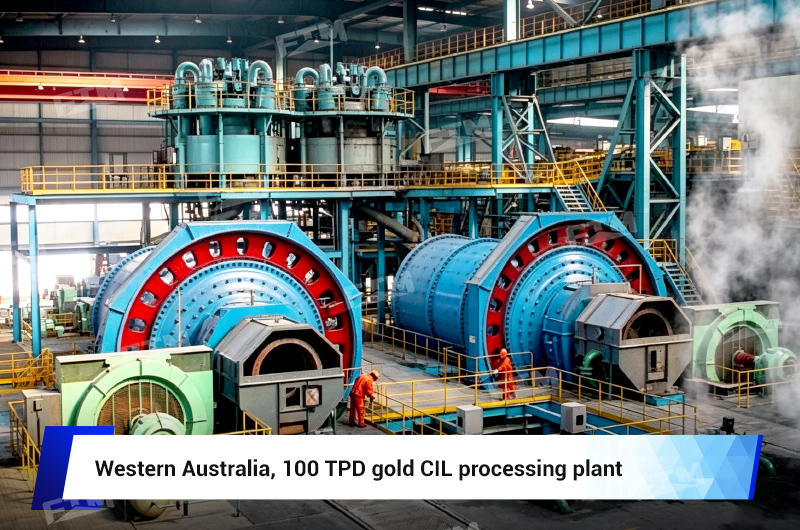
FTM Machinery had customized a gold CIL processing plant with a daily processing capacity of 100 tons of raw ore, complying with local environmental regulations and strictly controlling overall investment.
The CIL plant achieves a gold recovery rate of approximately 91%, with a total investment cost of $500,000.
2. Southern Zambia, 50 TPD gold CIL processing plant
The Zambian customer wants to process low-sulfur quartz weathered oxidized gold deposits with a total sulfide content of less than 2% and completely exposed gold.
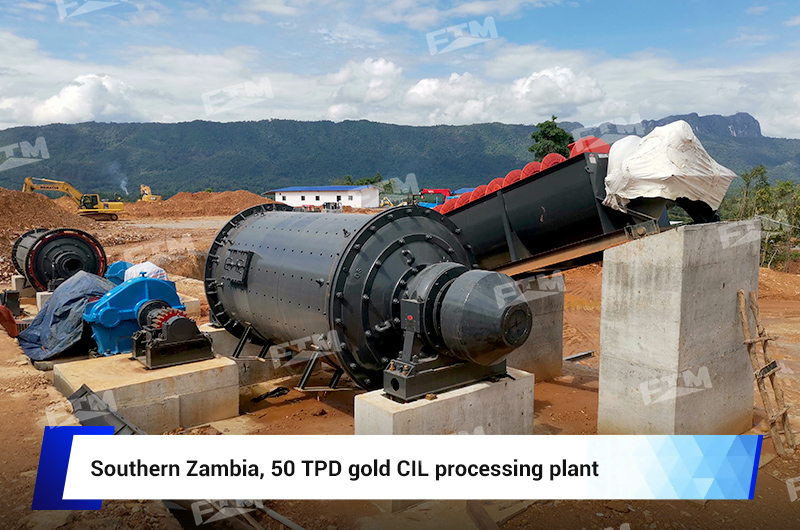
FTM Machinery had customized a solution for a gold CIL plant with a daily processing capacity of 50 tons, tailored to local conditions. The process is simple and reduces local labor costs.
Ultimately, the plant achieves a gold recovery rate of approximately 94%, with a total investment of $200,000.
FTM Machinery provides comprehensive support for gold CIL process
The gold CIL processing is a complex integrated workflow, and every step impacts your project's profit margin. As a highly reliable mining equipment manufacturer, FTM Machinery is your trusted partner to guarantee the smooth commissioning of your project.
- Customized process support: Tailor-made gold CIL process flows.
- One-stop equipment supply: Provide a complete set of CIL plant equipment.
- Full technical support and commissioning: Provide comprehensive technical guidance and rapid equipment commissioning.
- Long-term operation and maintenance support: Regularly monitor production line operating conditions and provide optimization solutions based on actual needs.
Contact us to obtain your exclusive custom gold CIL process solution.