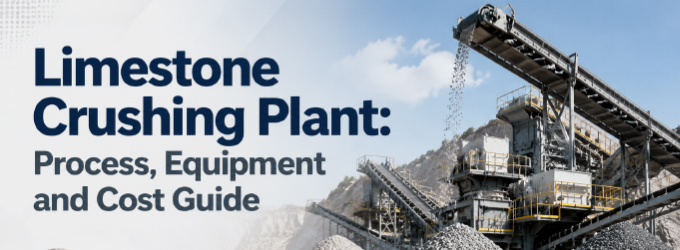
Cement is an irreplaceable construction material. All qualified cement uses limestone as its primary raw material.
The complete production process of cement from limestone has four stages: Raw Material → Raw Meal → Clinker → Cement. High-quality cement production follows a core process: two grinding stages and one high-temperature calcination.
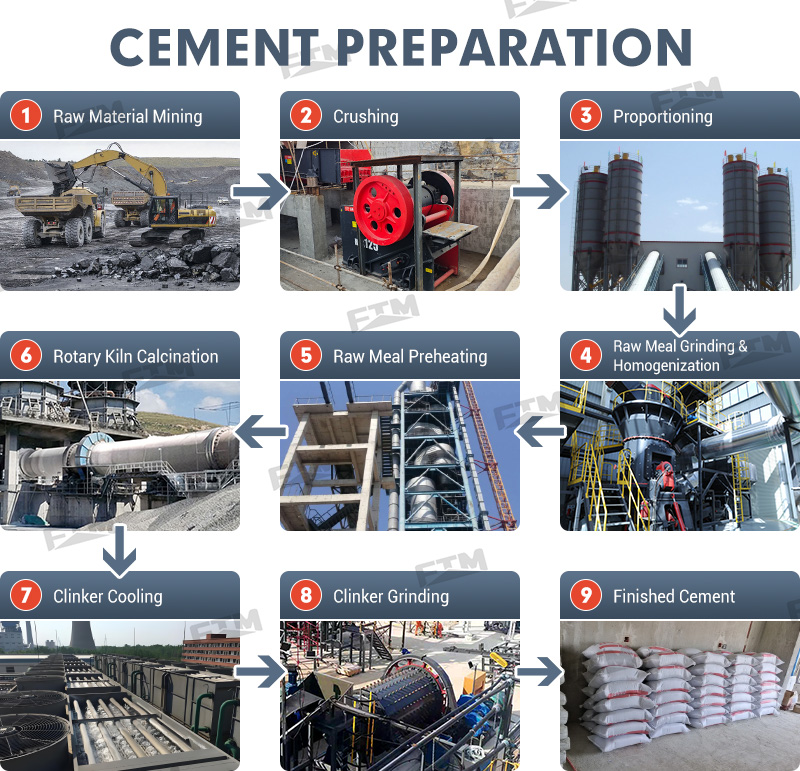
FTM Machinery supplies crushing, grinding and calcination equipment for limestone-to-cement processing. Our integrated dry cement lines range 500–10,000 t/d, supporting global users:
- Plant operators seeking crushing, grinding or calcination section equipment
- Cement plant retrofit contractors
- Building material EPC companies
- Mines for raw material extraction and raw meal preparation
- Municipal construction material suppliers
Learn how limestone is processed into cement and find equipment suited to your project.
Stage 1: Cement raw material prep & limestone crushing
(raw materials → homogenization)
Large lumpy limestone serves as the core raw material for cement production, supplemented by clay, sandstone and iron-bearing additives. All raw materials are stored separately and homogenized.
Two mainstream crushing methods are available for cement raw material limestone:
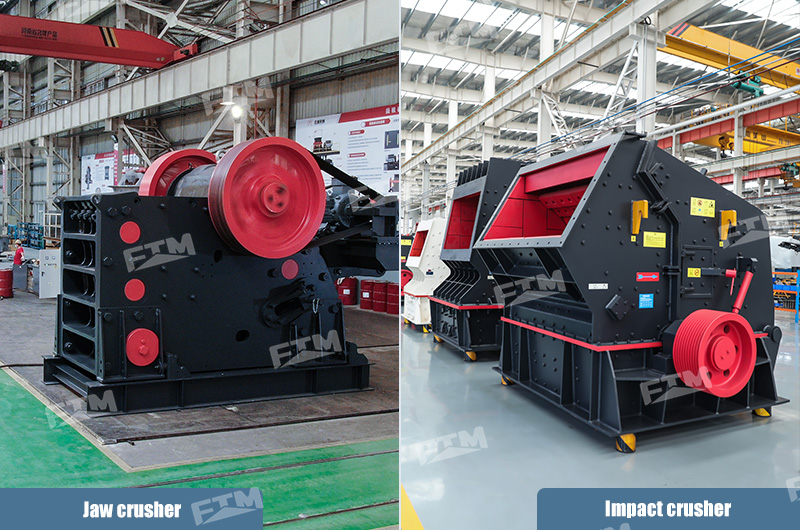
1. Jaw crusher + impact crusher
The jaw crusher performs stable primary crushing for oversized limestone blocks. It handles high-compression-strength limestone with reliable overload resistance and high stability even under overload conditions.
The impact crusher shapes limestone particles and greatly reduces flaky and elongated fragments.
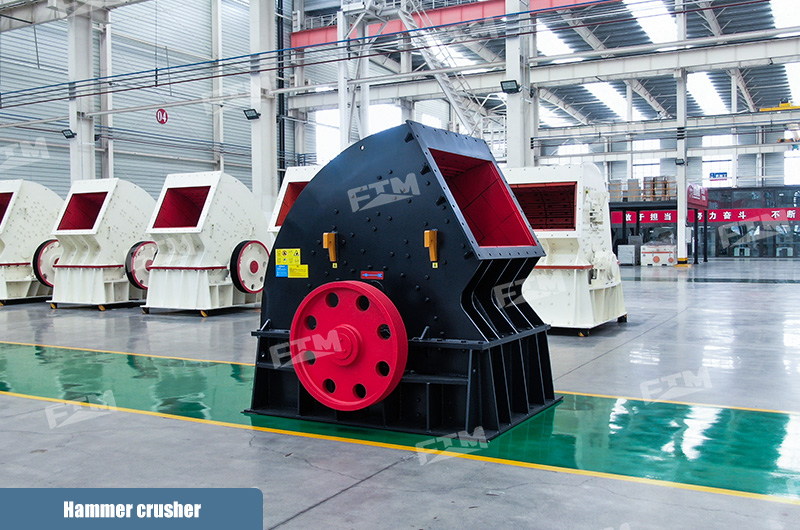
A hammer crusher reduces large limestone blocks in one pass to meet particle size requirements before raw meal grinding. This setup eliminates the need for secondary fine crushing equipment and simplifies the crushing process.
The machine comes with lower capital cost and easy maintenance. Fast-change wear components minimize plant downtime, making it ideal for small and medium cement plants.
| Equipment | CAPEX Upfront Investment | OPEX Operating Cost | Capacity | Feed & Output Size | Output Size |
| Jaw Crusher + Impact Crusher | Relatively high CAPEX | Medium OPEX, ideal for large cement plants | 150–1,000 t/h | ≤1,000 mm | 0–25 mm |
| Single-stage Hammer Crusher | Low CAPEX | Relatively high OPEX; hammer wears fast, for soft limestone & medium / small plants | 30–300 t/h | ≤800 mm | 0–25 mm |
Submit Working Conditions | Free Equipment Advice
Stage 2: Cement raw meal grinding
(raw materials → raw meal)
After crushing, limestone raw materials go through homogenization. Homogenized limestone, clay and iron ore are proportioned and metered before feeding into the grinding mill for cement raw meal grinding. Two common grinding solutions are available:
Vertical roller mill integrates drying, grinding and classifying in one unit. It has a small footprint and consumes 20–30% less power than ball mills.
The machine handles limestone with moisture content up to 15%, fitting mainstream dry-process cement lines including 2,500 t/d and 500 t/d.
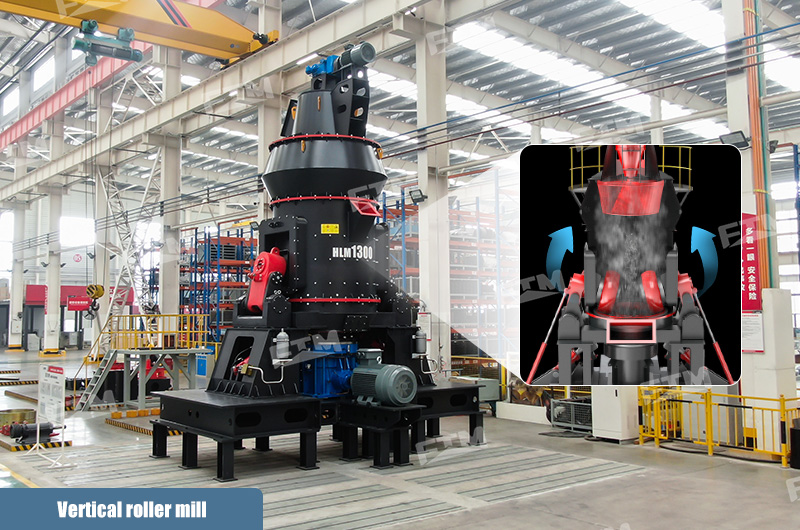
Waste heat from the kiln tail dries the feed material, slashing energy use for drying. A built-in dynamic classifier controls product fineness and stabilizes raw meal composition.
2. Ball mill
Ball mills boast reliable material adaptability and straightforward maintenance. They handle both cement raw meal grinding and clinker grinding.
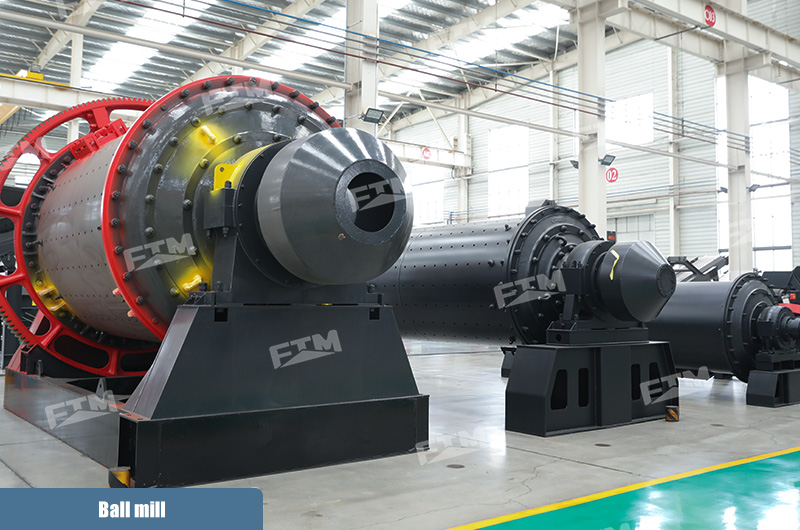
Simple operation and stable running are core strengths of ball mills. They accommodate various feed materials, including high-moisture stock.
On the downside, standalone drying equipment is usually required. Long-term operation brings high power draw, large footprint and elevated noise levels.
After grinding, qualified cement raw meal transfers to the raw meal homogenization silo for storage.
| Equipment | CAPEX Upfront Investment | OPEX Operating Cost | Capacity | Feed Size | Output Fineness |
| Vertical Roller Mill | Relatively high | Medium-low, low power consumption, suitable for medium-large NSP cement plants | 40–600 t/h | ≤ 80 mm | Raw meal, controlled by 80 μm sieve residue |
| Ball Mill | Low | Relatively high, high power consumption, wear of liners and grinding media, suitable for small-medium plants | 10–200 t/h | ≤ 25 mm | Raw meal, controlled by 80 μm sieve residue |
Free Consultation | Get Selection Solution
Stage 3: Cement clinker calcination
(raw meal → clinker)
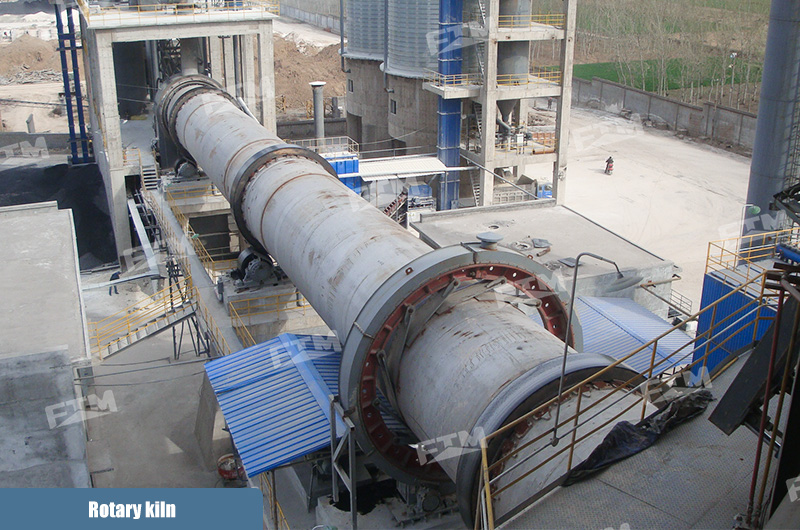
At the cement burning stage, raw meal powder first passes through cyclone preheaters and a calciner. Counter-current heat exchange rapidly raises material temperature and completes most calcium carbonate decomposition, drastically cutting the calcination load on the rotary kiln.
Pre-treated feed then flows into the rotary kiln. High-temperature sintering converts the raw meal into cement clinker.
Free Consultation | Get Latest Quotation
Advantages of cement rotary kilns:
- Stable clinker quality: The inclined cylinder rotates at low speed while maintaining a high temperature range of 1,300–1,450℃ inside. Complete chemical reactions minimize strength variation in finished clinker.
- Continuous large-scale production: Single-line capacity can reach up to 10,000 t/d. 24-hour non-stop operation fits medium and large dry-process cement plants.
- High thermal efficiency and low fuel cost: Compatible with multi-stage suspension preheaters and precalciner (NSP system). Kiln tail waste heat supplies the preheater, precalciner and grate cooler.
- Wide fuel flexibility: Supports coal powder, petroleum coke, natural gas and heavy oil. Its high-temperature alkaline environment allows alternative fuels and industrial solid waste incineration.
- Adjustable in-kiln temperature: Minor fluctuations in raw meal composition can be offset by adjusting kiln speed and flame temperature to reduce clinker quality variation.
After burning, clinker transfers to the grate cooler rapid cooling. The uniformly granulated semi-finished clinker is stored inside the clinker silo for subsequent processing.
Our popular rotary kiln models:
| Production Capacity (t/d) | Product Specification (m) | Inclination (%) | Rotation Speed (r/min) | Motor Power (kW) | Remarks |
| 500 | Φ3.0×45 | 3.5 | 0.5–2.47 | 75 | Outside Disassemble Kiln |
| 1,000 | Φ3.2×50 | 3.5 | 0.6–3.0 | 125 | Outside Disassemble Kiln |
| 2,500 | Φ4.2×60 | 4 | 0.41–4.07 | 375 |
Kiln With Perheater Precalcine |
| 5,000 | Φ4.8×74 | 4 | 0.396–3.96 | 630 |
Kiln With Perheater Precalcine |
| 8,000 | Φ5.6×87.5 | 4 | Max 4.23 | 800 |
Kiln With Perheater Precalcine |
Stage 4: Cement grinding & finished product
(clinker → cement)
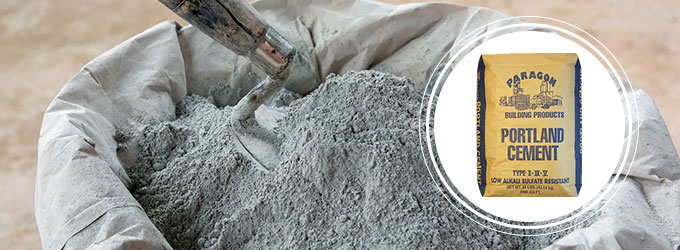
Clinker is a semi-finished product and cannot be used directly as cement.
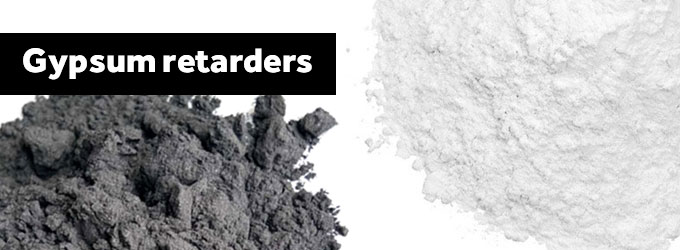
After discharge, clinker is precisely proportioned with gypsum and industrial additives before being fed into cement grinding equipment. The ground material then passes through a classifier for particle separation.
Fines meeting the target fineness pass through as product, while oversize material is recycled back to the mill for further grinding.
FTM cement grinding mills produce cement to meet different standards:
- Ordinary Portland Cement (OPC, EN 197, ASTM): 330–380 m²/kg, 45 μm sieve residue 5%–10%
- High Early Strength Cement (Type R / ASTM Type III): 400–450 m²/kg. Finer grinding speeds up hydration, so concrete gains usable strength quickly.
- Low Heat Cement: 280–320 m²/kg. Coarser fineness reduces hydration heat, preventing thermal cracking in mass concrete.
Finished cement goes through dust collection, stored in silos, and shipped in bags or bulk.
Cement manufacturing equipment overview
| Production Stage | Core Equipment | Main Function | Key Indicators |
| Raw Material Crushing | Jaw Crusher + Impact Crusher / Hammer Crusher | Crush large limestone to 20–30 mm | Discharge particle size, reduction ratio |
| Raw Material Homogenization & Storage | Stacker-Reclaimer + Raw Material Homogenizing Yard | Blend raw materials to stabilize chemical composition | Composition uniformity |
| Raw Meal Grinding | Vertical Roller Mill (VRM) or Ball Mill + Dynamic Separator | Dry and grind raw meal with kiln waste heat | R90μm residue 12%–16%. Blaine 250–320 m²/kg |
| Clinker Calcination | Cyclone Preheater + Precalciner + Rotary Kiln + Grate Cooler | Calcinate raw meal into clinker at high temperature | Free CaO content; burning zone temperature 1300–1,450℃ |
| Cement Grinding | Cement Ball Mill / Vertical Mill / Roller Press Combined Grinding System + Separator | Grind clinker, gypsum and additives into fine cement powder | Blaine 330–380 m²/kg; R45μm residue 5%–10% |
| Finished Product Storage & Dispatch | Cement Silo + Packing Machine / Bulk System | Store and deliver cement in bulk or bags | Cement strength, soundness |
40 years of R&D experience in cement equipment
With 40+ years of experience, FTM Machinery provides reliable cement equipment and practical solutions at competitive prices.
Product quality and brand reputation are our top priorities. Support does not end after the sale. Our team tracks equipment performance and gathers feedback to resolve on-site issues quickly.
Our services include:
- Production line process layout design
- Energy-saving retrofits for new and existing production lines
- Equipment selection and free solution configuration
- EPC turnkey services
Welcome to visit our factory or contact us for inquiries. Request a quote
Phone No./WhatsApp: +8619949199290
Frequently Asked Questions
1. How does cement fineness affect finished performance?
- A: Finer cement develops early strength faster. Coarser cement generates less hydration heat for mass concrete projects.
2. Can one mill serve both raw meal and cement grinding?
- A: Not recommended. Raw meal mills handle drying and grinding, while cement mills require precise fineness control. They operate under different conditions with different particle targets.
3. Do I have to buy a complete cement production line?
- A: No. You may select a full plant solution or individual equipment such as crushers, vertical mills, rotary kilns and cement mills.
4. What is the difference between dry and wet cement production processes?
- A: Dry process uses raw meal powder with low moisture, consumes less fuel and is widely adopted. Wet process mixes raw materials into slurry, higher heat consumption and rarely used for new plants.
5. What factors affect cement plant output and efficiency?
- A: Raw material stability, equipment condition, thermal system of preheater & kiln, and operational management.