How can you produce well-shaped, evenly graded sand without overspending on sand making equipment?
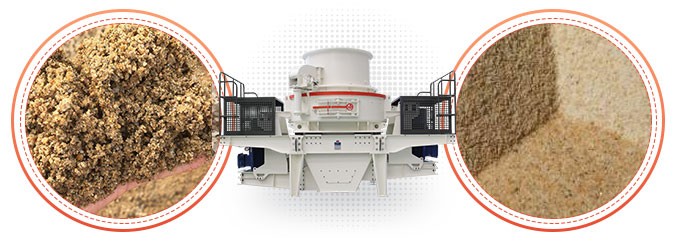
The answer is a VSI crusher (Vertical Shaft Impact Crusher). Designed for sand making and aggregate shaping, it is a key piece of equipment in many high-quality manufactured sand plants.
Why do many sand plants choose a VSI crusher?
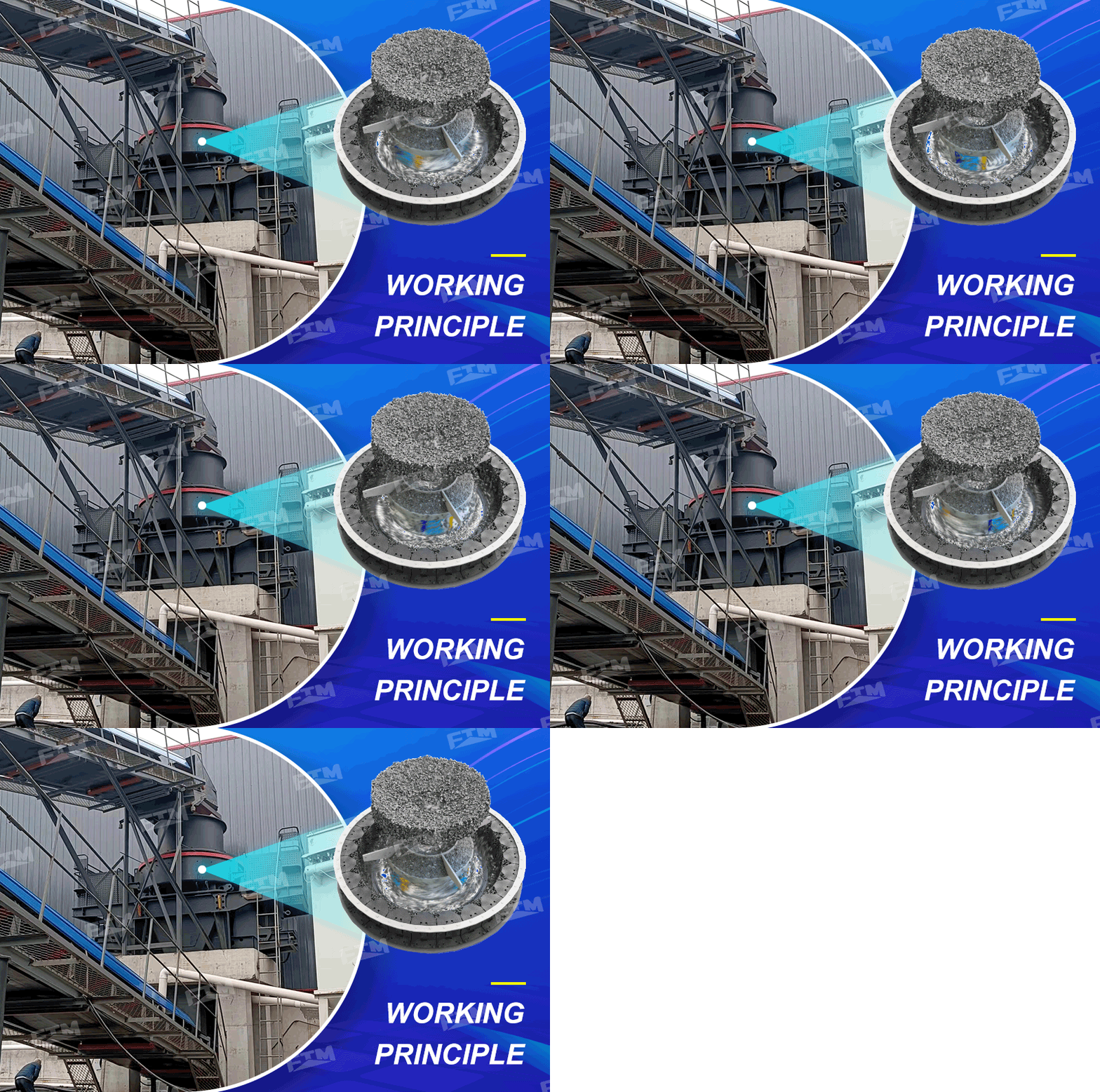
Unlike traditional jaw and cone crushers, which mainly use compression crushing, a VSI crusher uses high-speed impact crushing. The high-speed rotor accelerates the material and throws it against the crushing chamber, where the impact breaks and shapes the rock.
The VSI crusher gives you several benefits:
- Excellent particle shape: Helps reduce flaky, needle-like particles, making it ideal for concrete and asphalt.
- Crushing and shaping in one step: Besides reducing rock size, it improves particle shape by removing weak edges and corners.
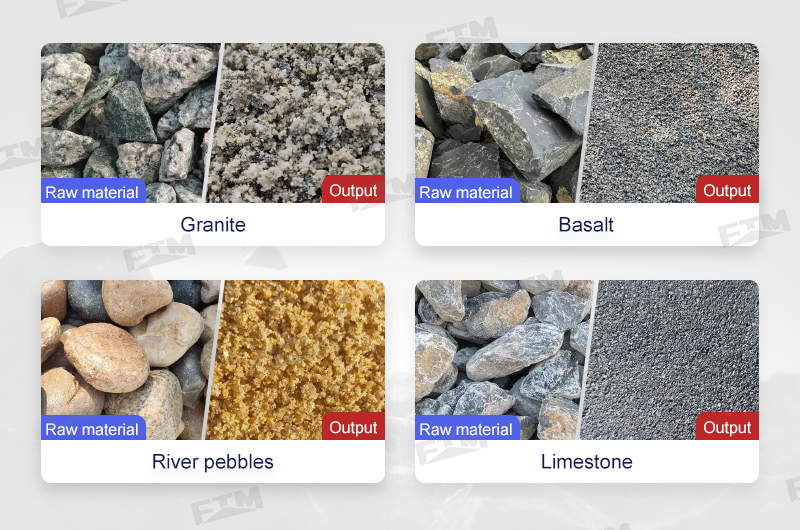
- Handles hard rocks: Easily crushes tough aggregate rocks like granite, basalt, river pebbles, quartz, limestone, and diabase.
- Flexible sand production: Allows operators to adjust rotor speed and feed rate to produce different sand sizes from 0–5 mm.
VSI crusher in a sand making plant
A complete sand making plant usually includes multiple crushing and screening stages. The VSI crusher is typically installed at the final crushing stage for shaping and fine crushing.
Vibrating Feeder → Jaw Crusher → Cone Crusher → VSI Crusher → Vibrating Screen → Sand Washer
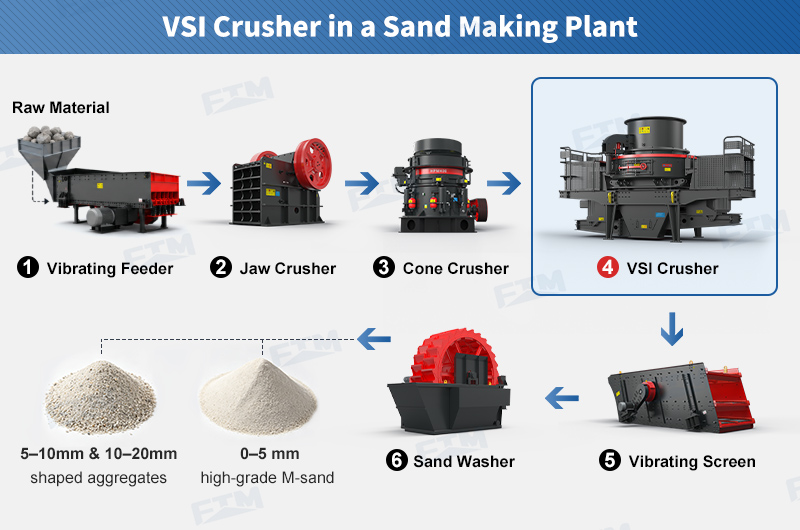
- Feed Size: Pre-crushed gravel, granite, basalt, limestone, mine tailings (<50 mm)
- Final Product: 0–5 mm high-grade M-sand, 5–10 mm and 10–20 mm shaped aggregates.
Rock-on-rock vs. rock-on-iron: How to choose?
VSI crusher offer two crushing modes to fit different rock hardnesses and budgets:
| Feature | Rock-on-rock mode | Rock-on-iron mode |
| Crushing principle | Rock hits rock cushion inside chamber | Rock hits high-chromium alloy anvils |
| Target material | Hard & abrasive rocks (granite, pebble, basalt) | Medium-hard & soft rocks (limestone, dolomite) |
| Sand output rate | Moderate (25%-35% fine sand per pass) | High (40%-55% fine sand per pass) |
| Wear part consumption | Extremely low | Slightly higher |
| Primary application | Shaping & crushing abrasive stone | High-efficiency sand production |
*Actual yield varies with feed material, feed size, rotor speed and target product size.
For abrasive materials like river gravel or granite, choose Rock-on-Rock mode. The rock crushes itself, saving you up to 70% in wear-part replacement costs.
Our popular models include the VSI 7611, VSI 8518, VSI 9526, and VSI 1140, with different capacities and feed sizes to meet various production needs. Get Latest Quote
| Model | VSI 7611 | VSI 8518 | VSI 9526 | VSI 1140 |
| Capacity (center & side feeding) | 80–180 t/h | 140–260 t/h | 200–380 t/h | 300–520 t/h |
| Max. feed size(soft material) | 35 mm | 40 mm | 45 mm | 50 mm |
| Max. feed size (hard material) | 30 mm | 35 mm | 40 mm | 40 mm |
We also provide complete plant integration support. From feeding to screening, FTM Machinery helps integrate the VSI crusher into your plant for smooth material flow, fewer bottlenecks, and higher output.
VSI crusher vs. other fine crushing equipment
When choosing a sand maker, plant operators usually compare VSI crushers with other common fine crushing machines, such as hammer crushers and roll crushers.
| Feature | VSI crusher | Hammer crusher | Roll crusher |
| Main function | Sand making & shaping | Medium / fine crushing | Fine crushing & grinding |
| Particle shape | Excellent | Average (high dust ratio) | Poor (flaky & needle-like) |
| Target hardness | Hard rock | Soft to medium-hard | Soft to medium-hard |
| Wear part lifespan | Very long | Short (hammers wear fast) | Moderate |
| Fine sand yield | High & adjustable | High (high dust ratio) | Moderate |
If your rock is hard, abrasive, and you have high quality standards for your sand, a VSI crusher is a smart investment.
For soft limestone, hammer and roll crushers can be cheaper initially, but their wear-part costs will jump significantly when handling hard rock.
VSI sand making plant case studies
1. 50 t/h mobile VSI crusher in Bolivia
Project challenge: Converting highly abrasive river pebbles into premium M-sand while keeping operating and wear costs strictly under control.
Result: Reduced wear-part replacement frequency by over 40% using Rock-on-Rock configuration.
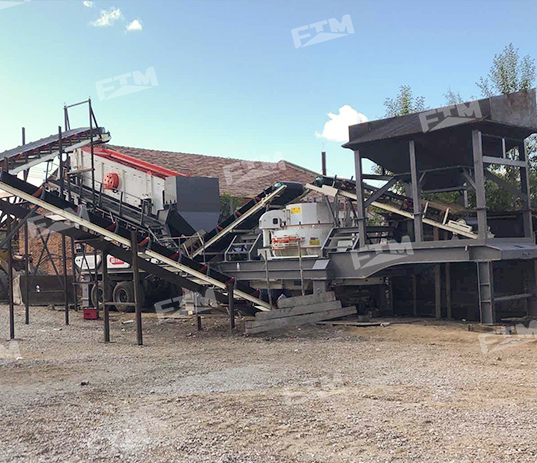
Raw material: River gravel
Capacity: 50 t/h
Feed size: ≤50 mm
Output size: 0–5 mm, 5–10 mm M-sand
2. 100 t/h fixed VSI sand making plant in Turkey
Project challenge: Upgrading a tertiary crushing stage to meet strict local concrete gradation standards and eliminate flaky particles.
Result: Achieved consistent cubical particle shape with zero rejected loads from local ready-mix concrete plants.
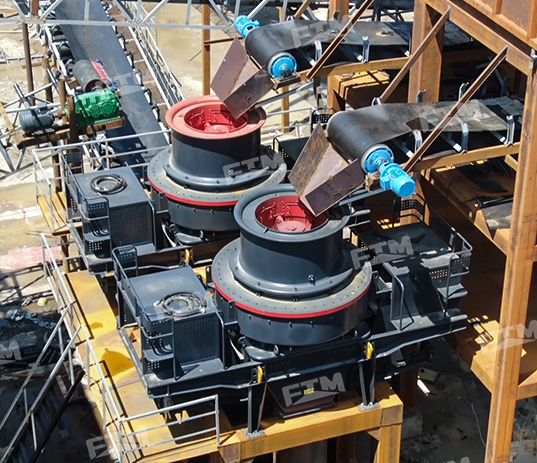
Raw material: Granite
Capacity: 100 t/h
Feed size: ≤40 mm
Output size: 0–3 mm fine sand
Your material. Your output. Your custom VSI solution.
We help you choose the right VSI crusher based on your material, required capacity, application and budget—without compromising on quality.
Whether you work in aggregates, recycling or mining, we can provide a VSI solution tailored to your process and production needs.
Talk to FTM Machinery today about your project and find the right VSI crusher for your operation.
Frequently asked questions
How much does a VSI sand crusher machine cost?
The price of a VSI crusher usually ranges from $15,000 to $120,000, depending on the model, production capacity (tph), motor power, and configuration. Basic models for small lines are more affordable, while heavy-duty machines with high-capacity deep rotors and automatic hydraulic systems cost more.
What is the difference between a VSI crusher and a cone crusher?
A cone crusher mainly uses compression to reduce rock size, while a VSI crusher uses high-speed impact to crush and shape particles. Cone crushers are commonly used for secondary or fine crushing, while VSI crushers are widely used for manufactured sand production and aggregate shaping.
How can I reduce wear-part costs on a VSI crusher?
To reduce VSI crusher wear costs, use Rock-on-Rock mode for hard materials, keep a steady feed, and control feed moisture below 3–5% to prevent rotor clogging. Replace worn rotor tips in balanced pairs or sets to maintain rotor balance and reduce vibration.